
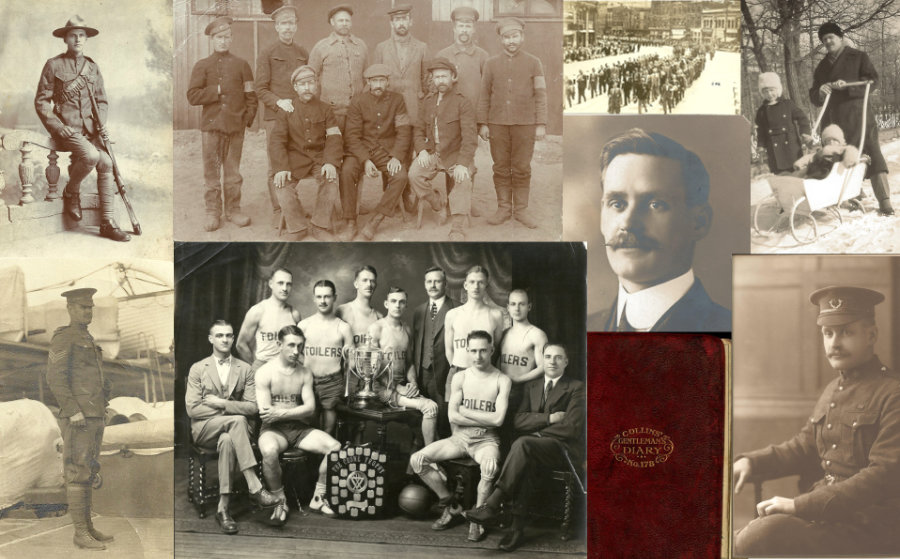
While this story focuses on the ten months of William’s life, from August 1914 to May 1915, there are a few things you should know first…
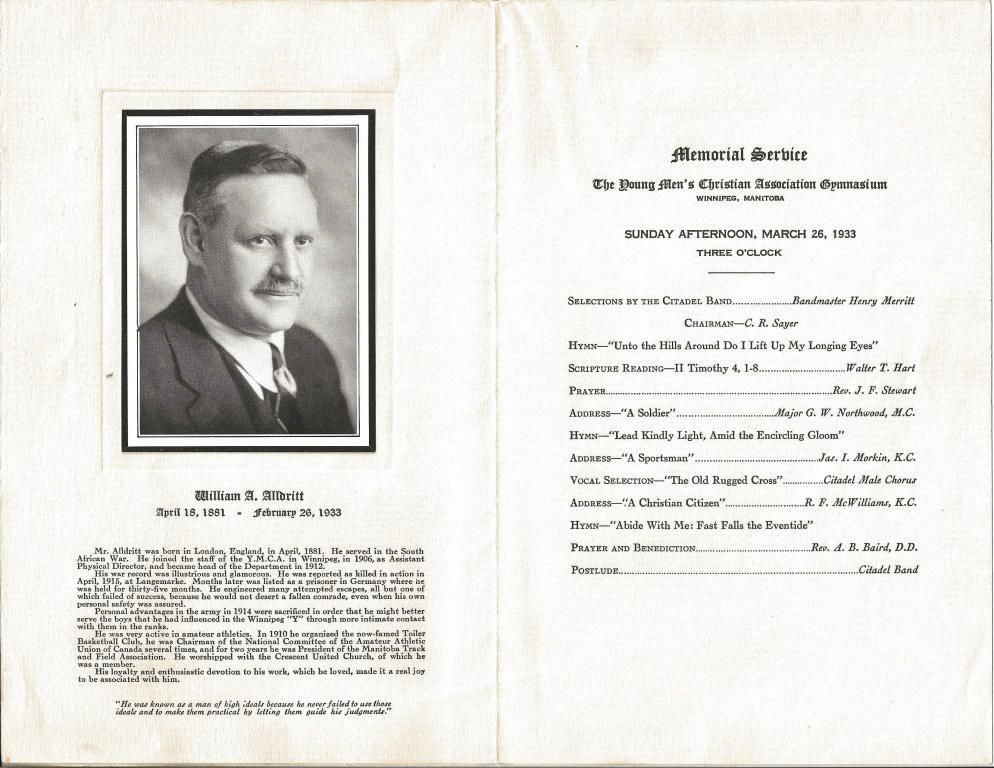
William Alexander Alldritt died of a stroke on February 26, 1933, after undergoing eye surgery. His health had been compromised by exposure to chlorine gas during the Battle of Ypres and due to years of maltreatment while a prisoner of war. He had not yet turned 52 and had only recently started a young family.
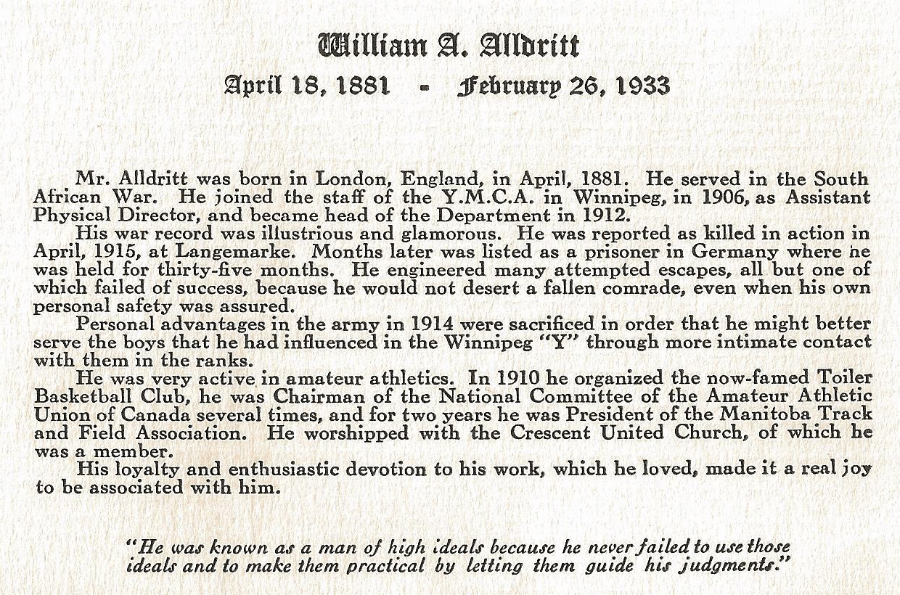
This story is an excerpt from a larger work in progress to chronicle the short but full life of William A. Alldritt, while sharing various published and unpublished letters and articles to illustrate his story.
Navigation tips:
Zoom in and click on map symbols for more information.
Click on highlighted text to view linked documents and images:
Cyan links will open media in a popup modal to give more context.
Magenta links will open pertinent documents in a new tab. These are worth exploring for a more in-depth experience.
Yellow links generally refer to external sources and contain detailed information on those specific topics.
December 27, 1932
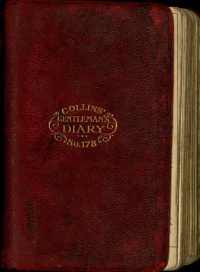
Eight weeks before he died, William’s 1915 diary from the front was mysteriously sent from Germany to his brother Harry, who was listed as his next of kin in official military records. An inscription in the diary notes that it was found on the battlefield in May, 1915, by a German soldier. William had begun, but not completed an entry for April 25, 1915, the day he was captured as a prisoner of war. It appears that the diary had laid open to that page, exposed to the rain and the mud, for many days.
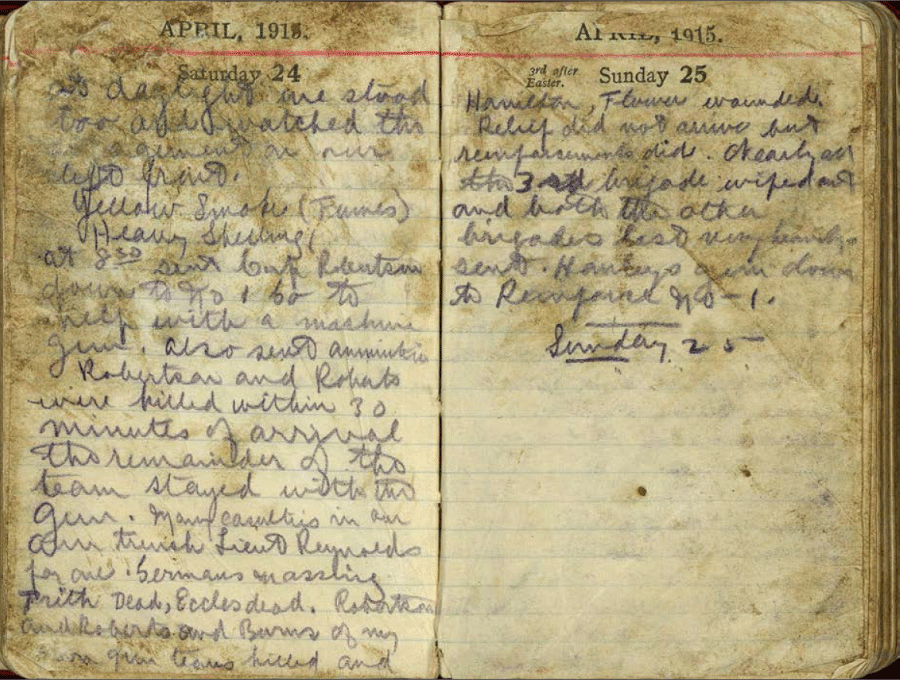
Where had it been for the past 17 years? Had it been part of a soldier’s collection of souvenirs from the war? Had it been sent to German military strategists to analyze the enemy’s battle preparations, looking for weaknesses to exploit? In any event, why was it being returned now?
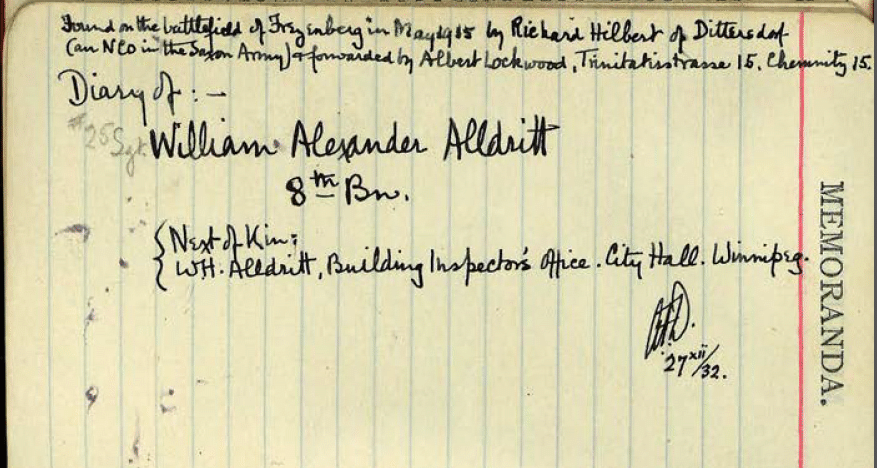
It is unlikely that William received the returned diary before his death on February 26, 1933, as it is part of the Library and Archives Canada collection1 and not amongst his personal papers.
YMCA and the Winnipeg Toilers
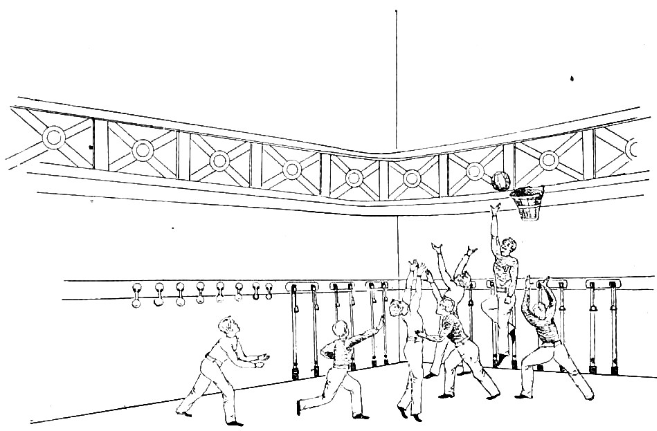
Young Bill was an avid sportsman and much of his youth was spent at YMCA gyms in Winnipeg. During that time he met T. Duncan Patton who had been employed as the Winnipeg YMCA Secretary since 1894.
Mr. Patton, who was originally from Montreal, had studied under James Naismith, a Canadian employed as an instructor at the YMCA Training School in Springfield, Massachusetts, who famously published the rules of “Basket Ball” in 1892. Mr. Patton was a member of the first team to ever play basketball.2
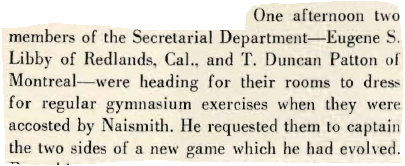
His own recollection of the moment3 was published in a souvenir magazine observing the Golden Jubilee of Basketball in 1941:
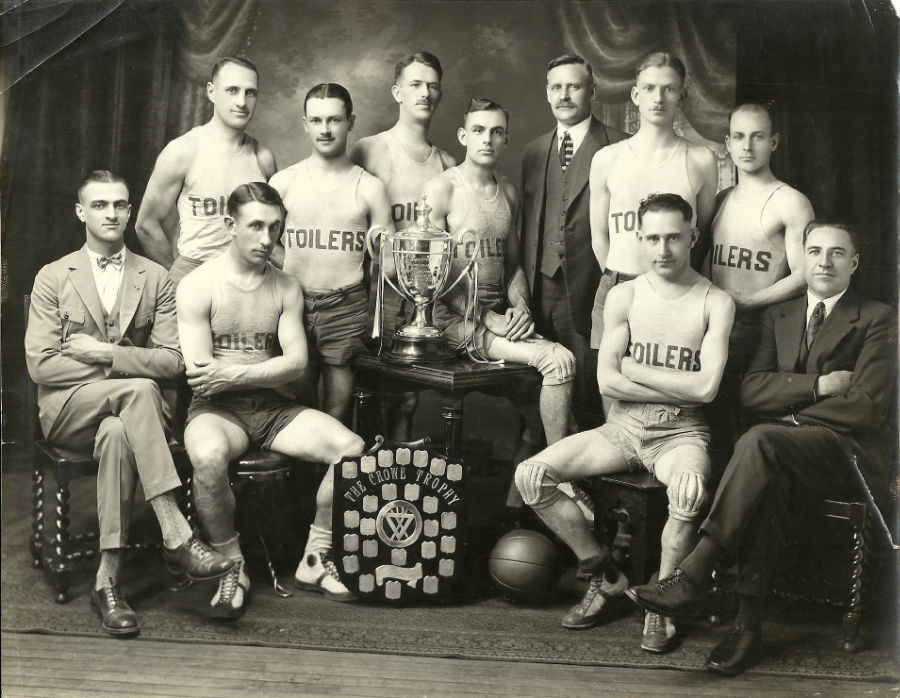
Prior to the First World War, William was himself employed by the YMCA in Winnipeg. He notably organized the Winnipeg Toilers Basketball Club, who chose the name “Toilers” to represent the idea of hard work, perseverance, and courage.
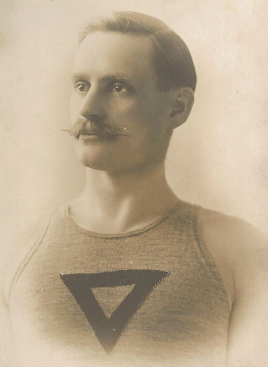
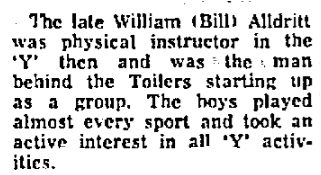
The Toilers team would later become three-time national champions and a Winnipeg legend and William would be recognized by the Manitoba Basketball Hall of Fame as builder of the sport within the province.
In 1912 William was promoted to Physical Director of the Selkirk Avenue YMCA.
Camp Stephens
Click the map symbols for more details and images. Images can be clicked to enlarge.
As part of his YMCA responsibilities, William managed the island “Y” camp, Camp Stephens, on Copeland Island in Lake of the Woods near Kenora, Ontario.
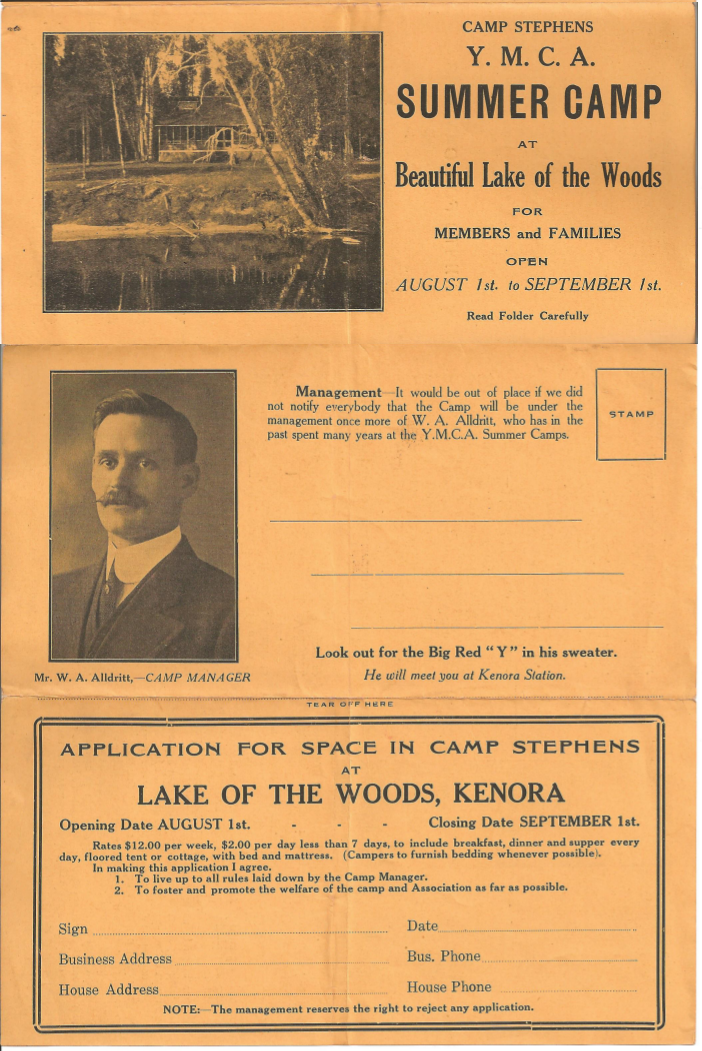
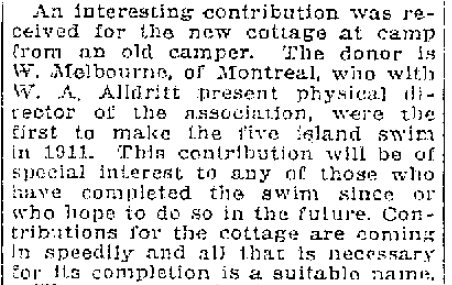
He was a popular figure at the camp and pushed the campers to new levels. In 1911 he established the five island swim challenge where campers swim a circuit of approximately 3 kilometres, touching each of the five islands surrounding Copeland Island, as described in the YMCA Camp Notes section of the Manitoba Free Press (June 26, 1926, p39). The Camp Stephens Alumni page has more information on his time at the camp.
August 1914 – Canada at War
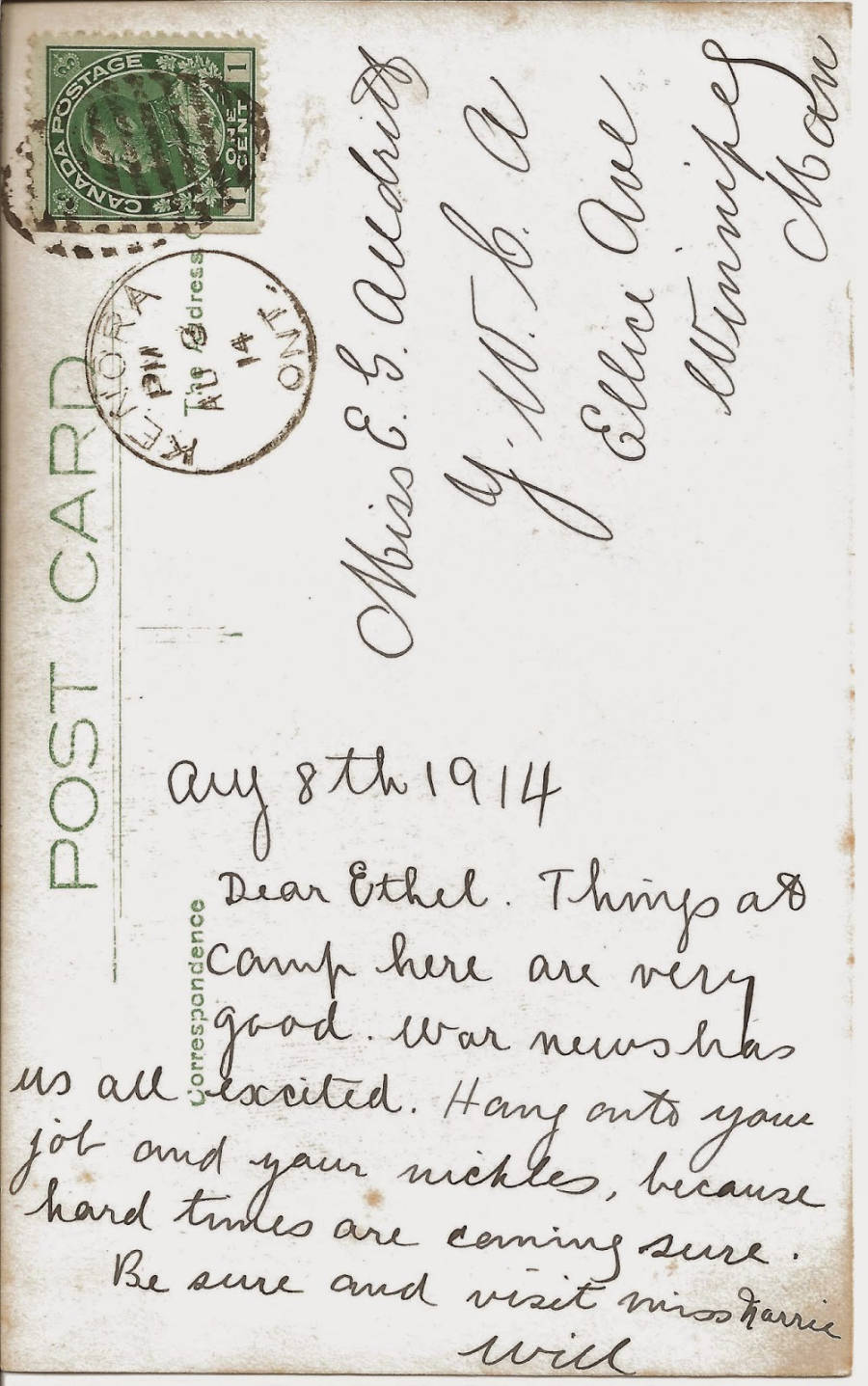
William was at Camp Stephens in August of 1914, when war was declared on Germany. On August 8, he wrote a brief postcard to his younger sister, Ethel.
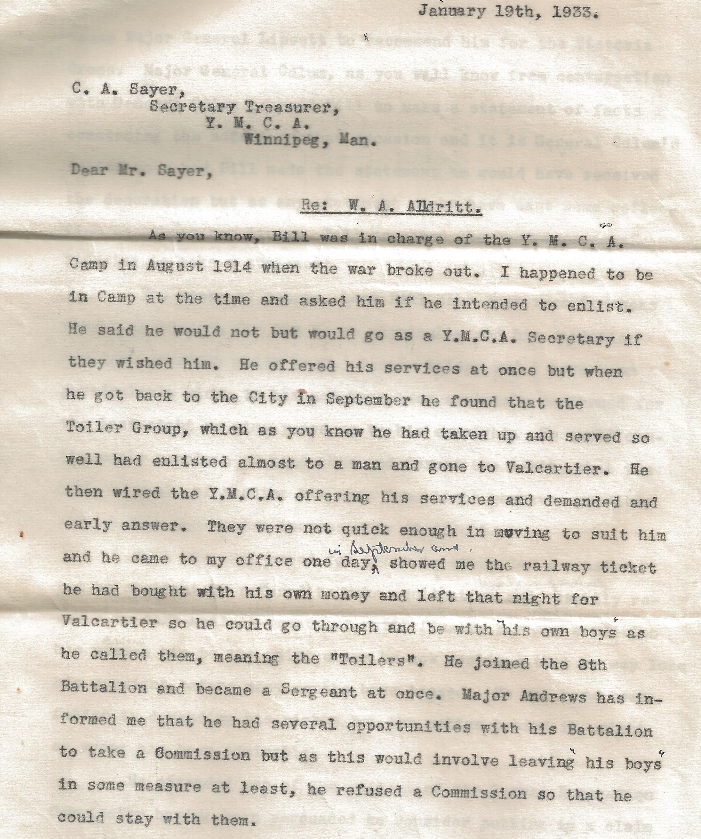
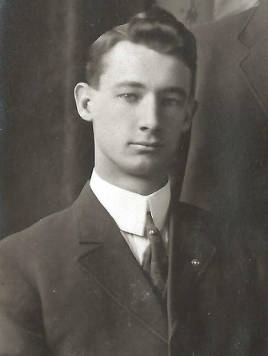
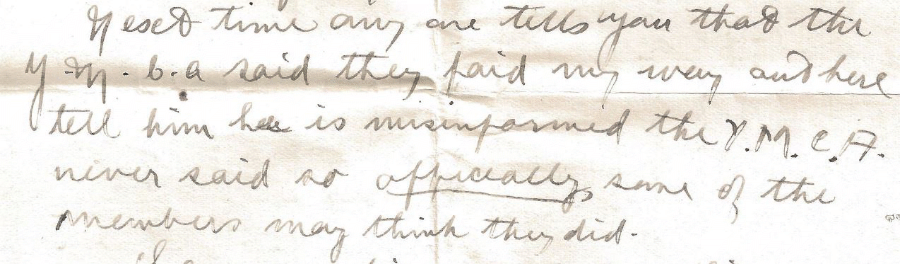
William’s letter to his brother, Harry, dated Jan. 26, 1915, supports the statement W.E. Davison made to Mr. Sayer; that Alldritt enlisted on his own and was not a formal representative of the YMCA.
September 1914 – Valcartier
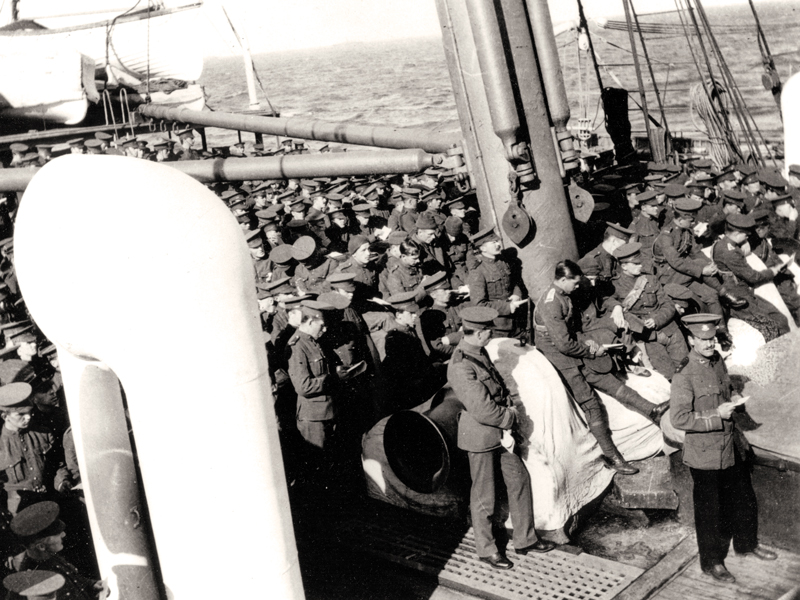
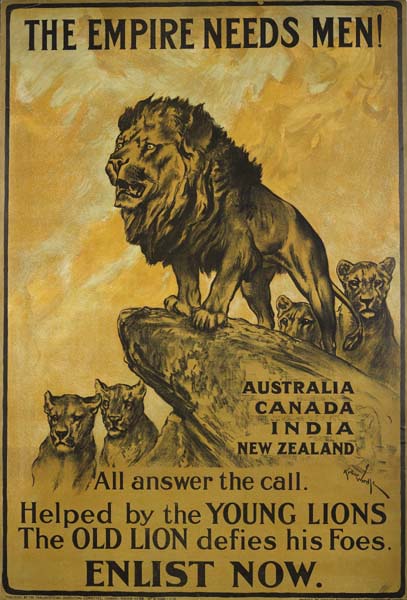
In 1964, CBC Radio released a documentary series recording the voices of those who had enlisted 50 years previously. Listen to three veterans recall their haste to enlist in August, 1914, in this brief excerpt from “Flanders’ Fields: Canadian Voices from WW1.”4
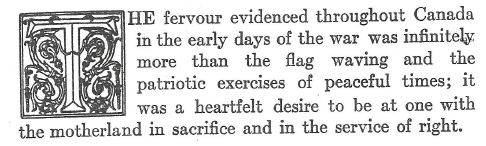
At the outset of the war the leaders of Canada’s YMCA immediately approached the government with a proposal to participate by providing support to the troops.6 The YMCA appointed Secretaries to oversee activities during the war, beginning with a comprehensive program of athletics at the mobilization camp at Valcartier.
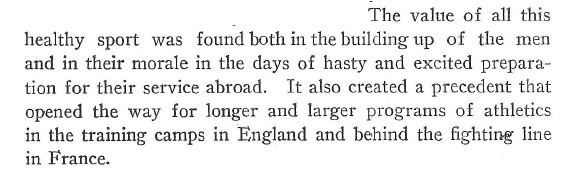
William’s sense of patriotism and duty did not allow him to wait to be appointed as a YMCA representative, however, and he enlisted with the Canadian Expeditionary Forces (CEF) on his own. He was mobilized at Valcartier and, as a former member of the 90th Winnipeg Rifles, was assigned to the 8th Battalion, along with many of his YMCA Toilers.
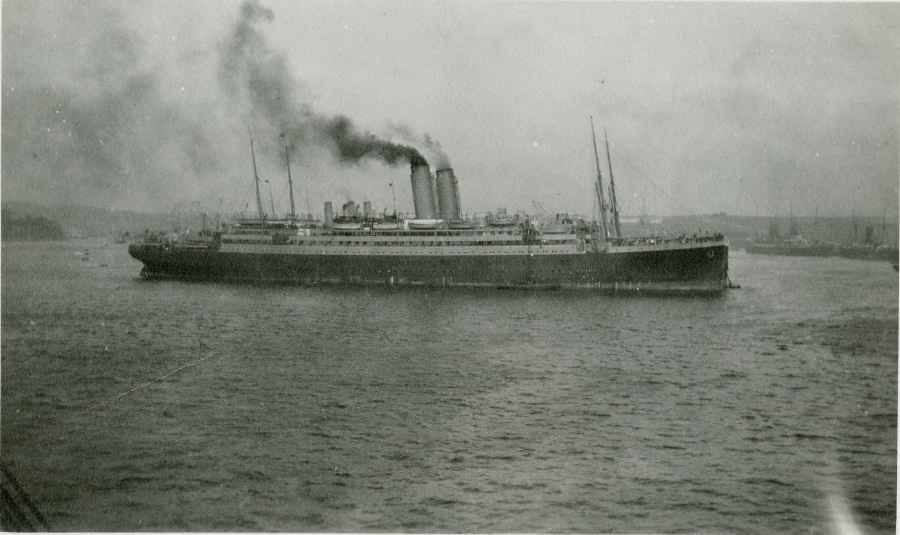
On October 3, 1914, William set sail for England aboard the troop ship RMS Franconia, formerly a merchant ship; part of a convoy of 32 ships.
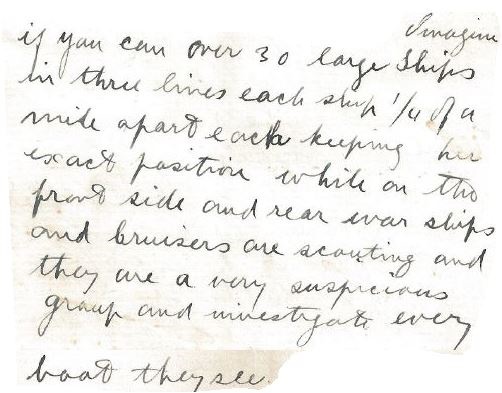
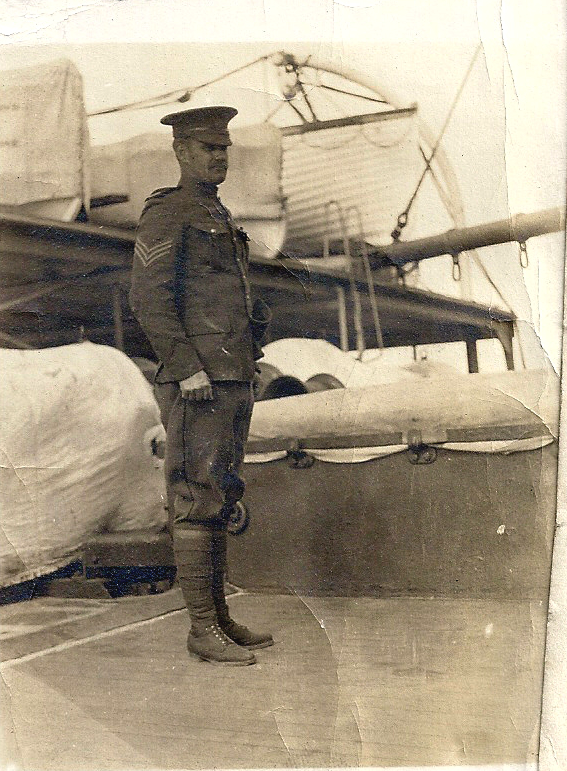
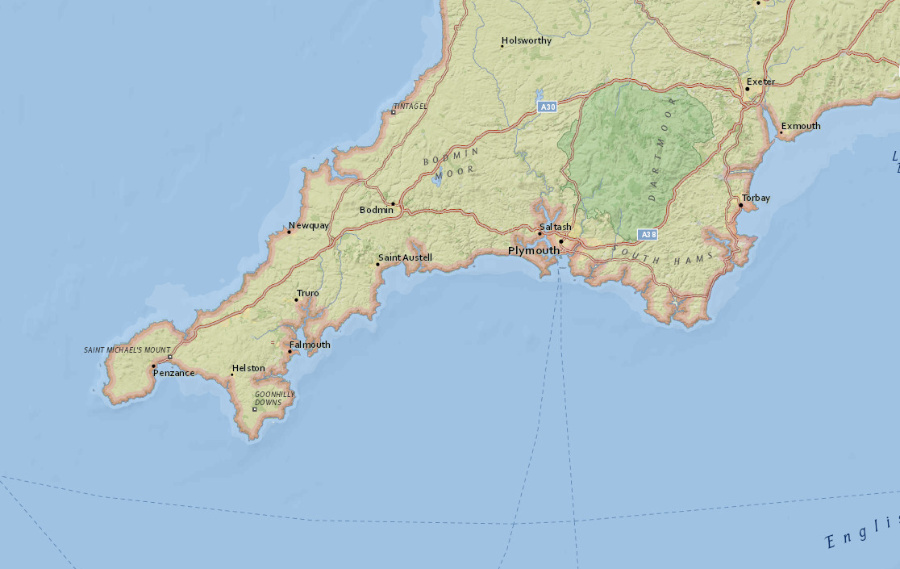
The Franconia landed in England at Devonport (Plymouth) on October 14, 1914.
Salisbury Plain
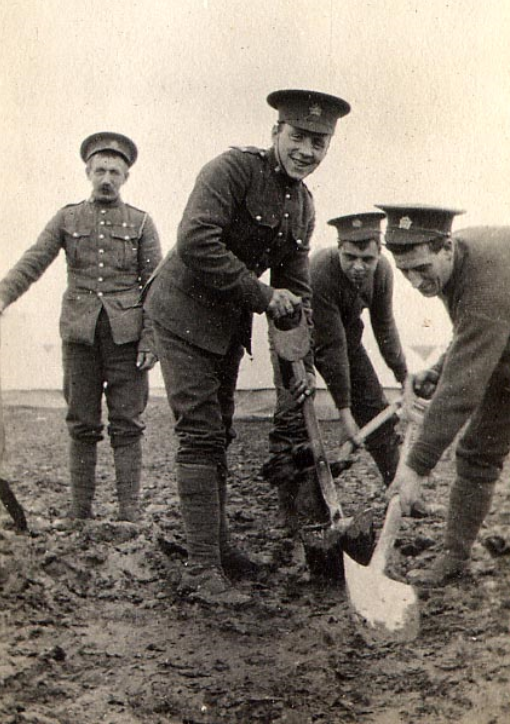
The Canadians left Plymouth and were encamped on Salisbury Plain where they trained for four months, most of it in terrible mud, as England experienced one of its wettest winters in decades. The Canadians learned basic soldiering under these difficult conditions.
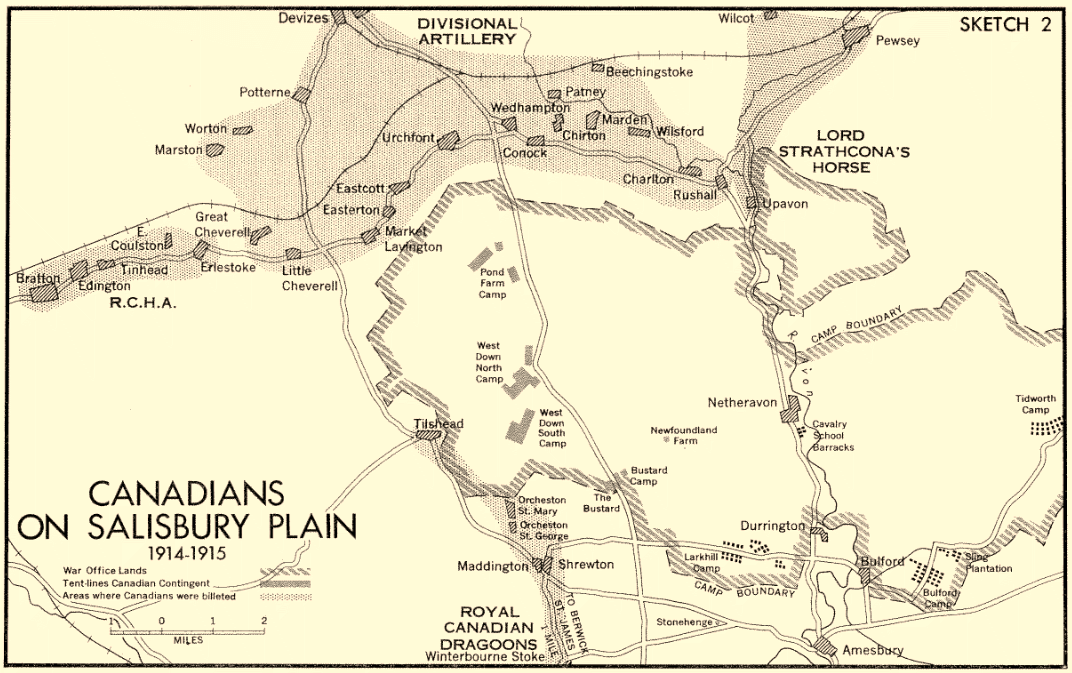
The Canadians’ encampment at Salisbury Plain is shown in this map from Col. G.W.L. Nicholson’s Official History of the Canadian Army in the First World War.8
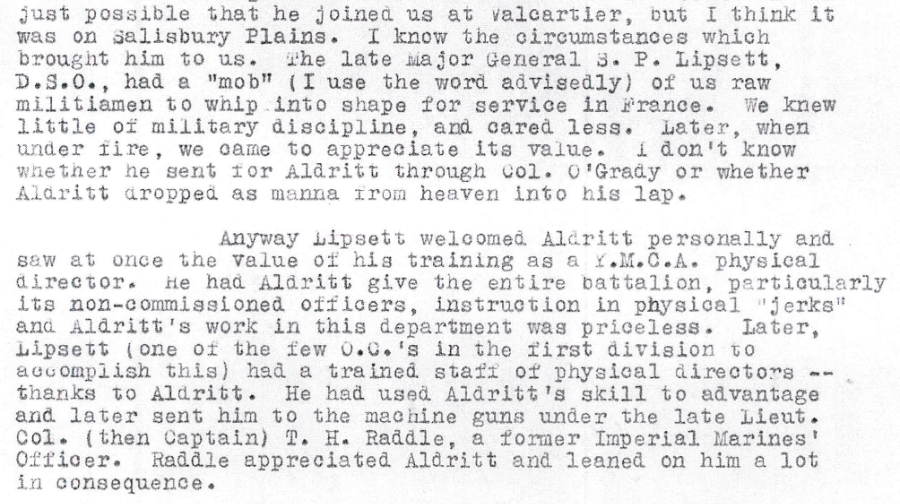
Manna from Heaven
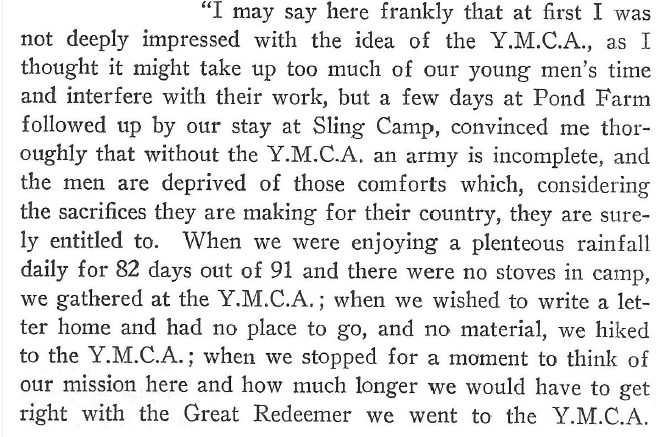
The YMCA continued to play an important part in the lives of the soldiers at Salisbury Plain. An un-named Canadian Major is quoted as follows in Bishop’s The Canadian Y.M.C.A. in the Great War:9
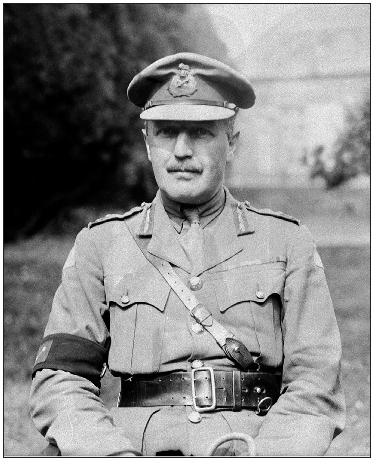
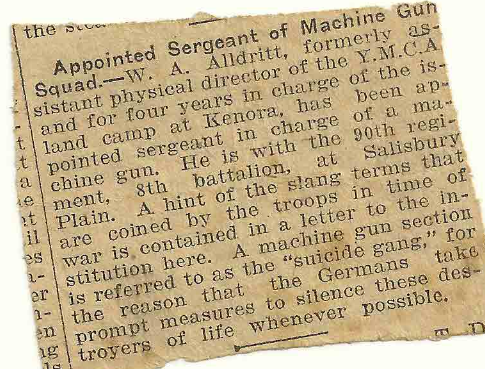
Although William’s role with the CEF was not to officially represent the YMCA, his value as a former YMCA Physical Director was apparently noticed by then Lt.-Col. Louis Lipsett, commanding officer of the 8th Battalion.
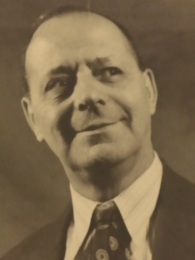
Winnipeg papers also reported on William’s activities:
Christmas 1914
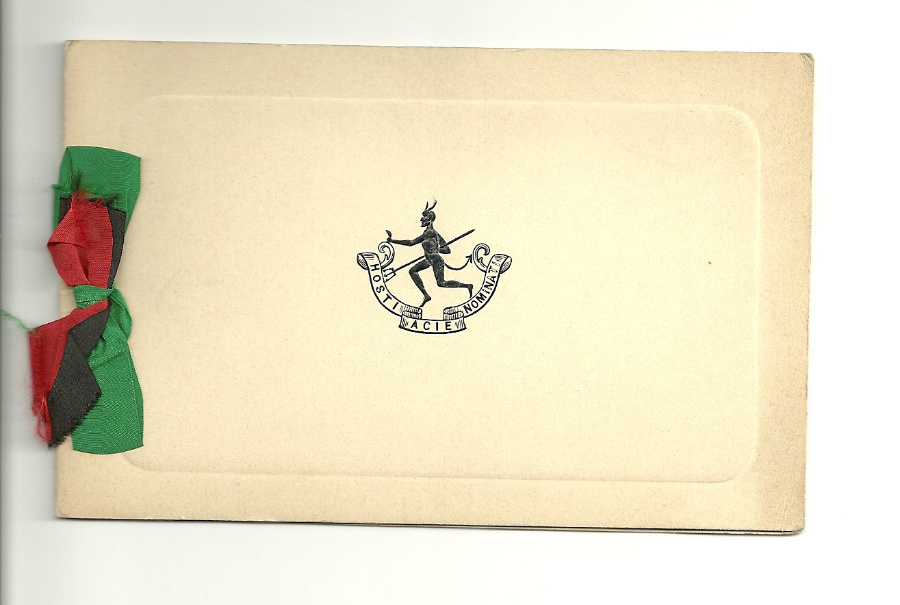
The unpleasant weather continued into December:
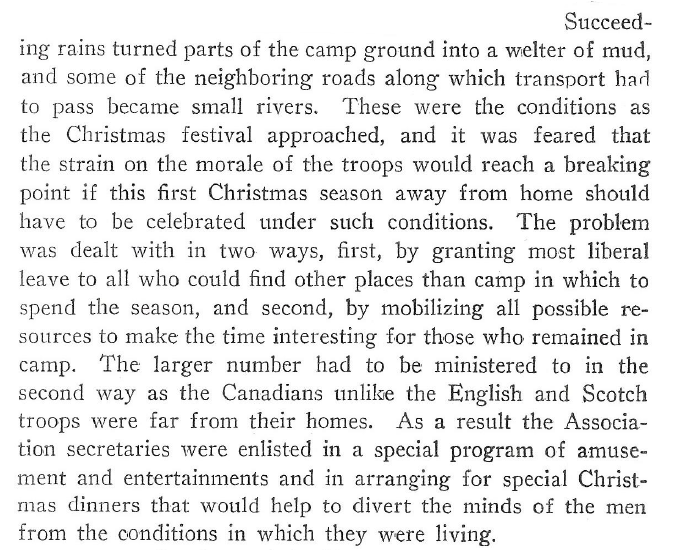
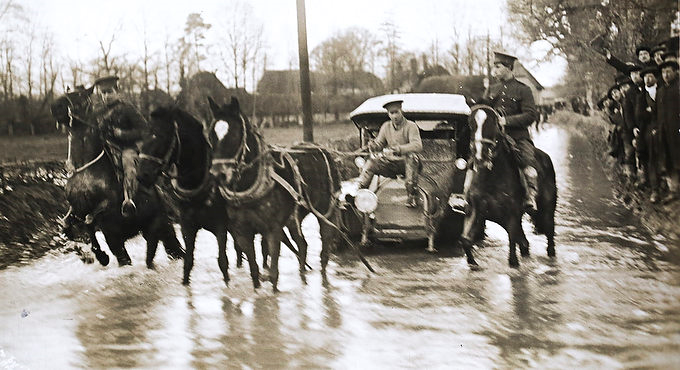
Following the YMCA’s Christmas program, William’s diary entry for January 1, 1915, states that he then received six days of leave and traveled in England to visit with his relatives.
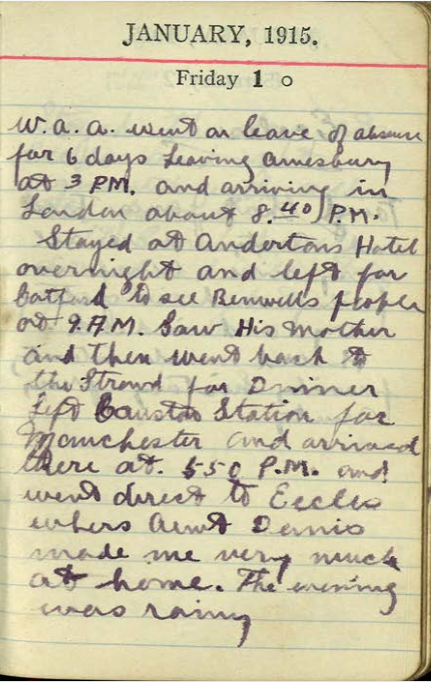
January 1915
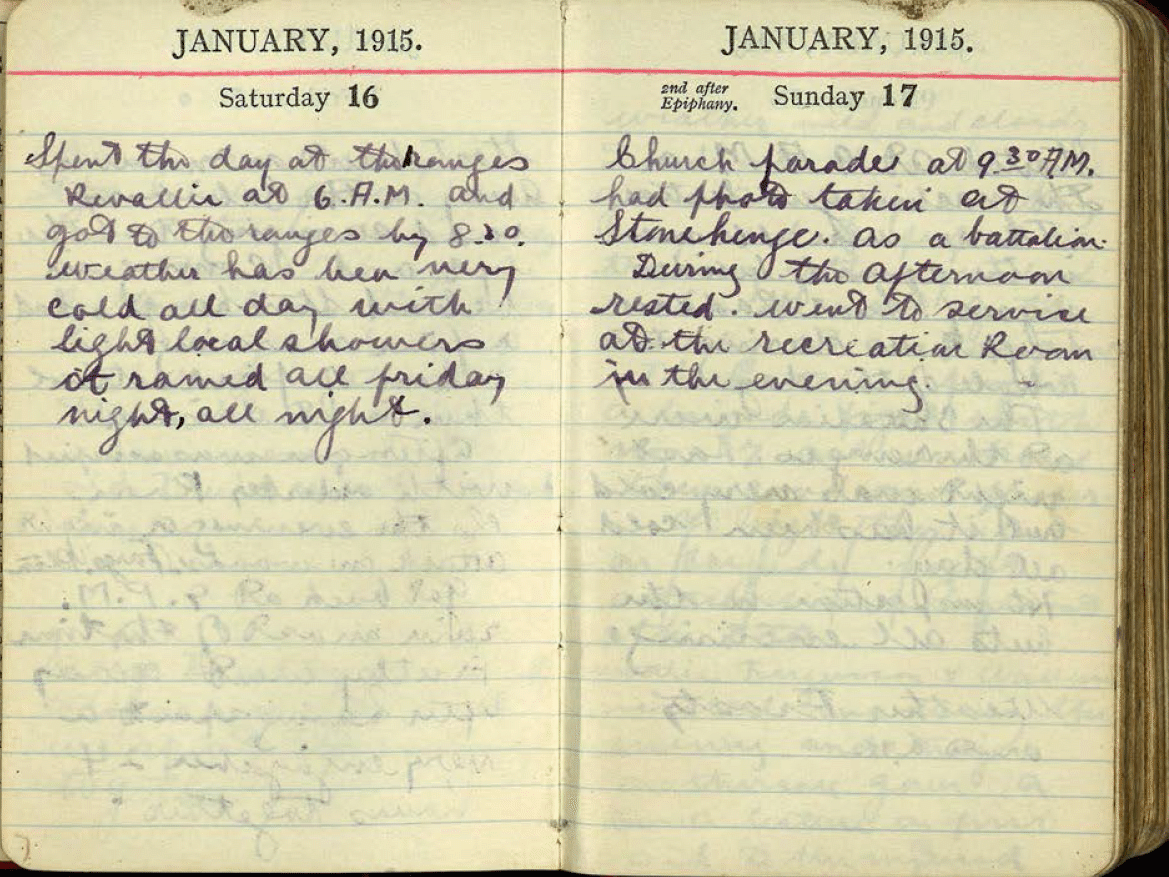
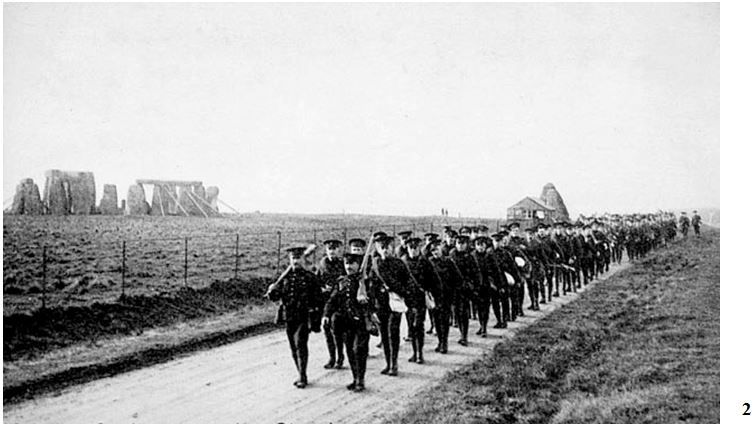
William was a dedicated journal writer and wrote in his diary daily. On Jan. 17, 1915 his battalion posed for a photograph in front of Stonehenge.
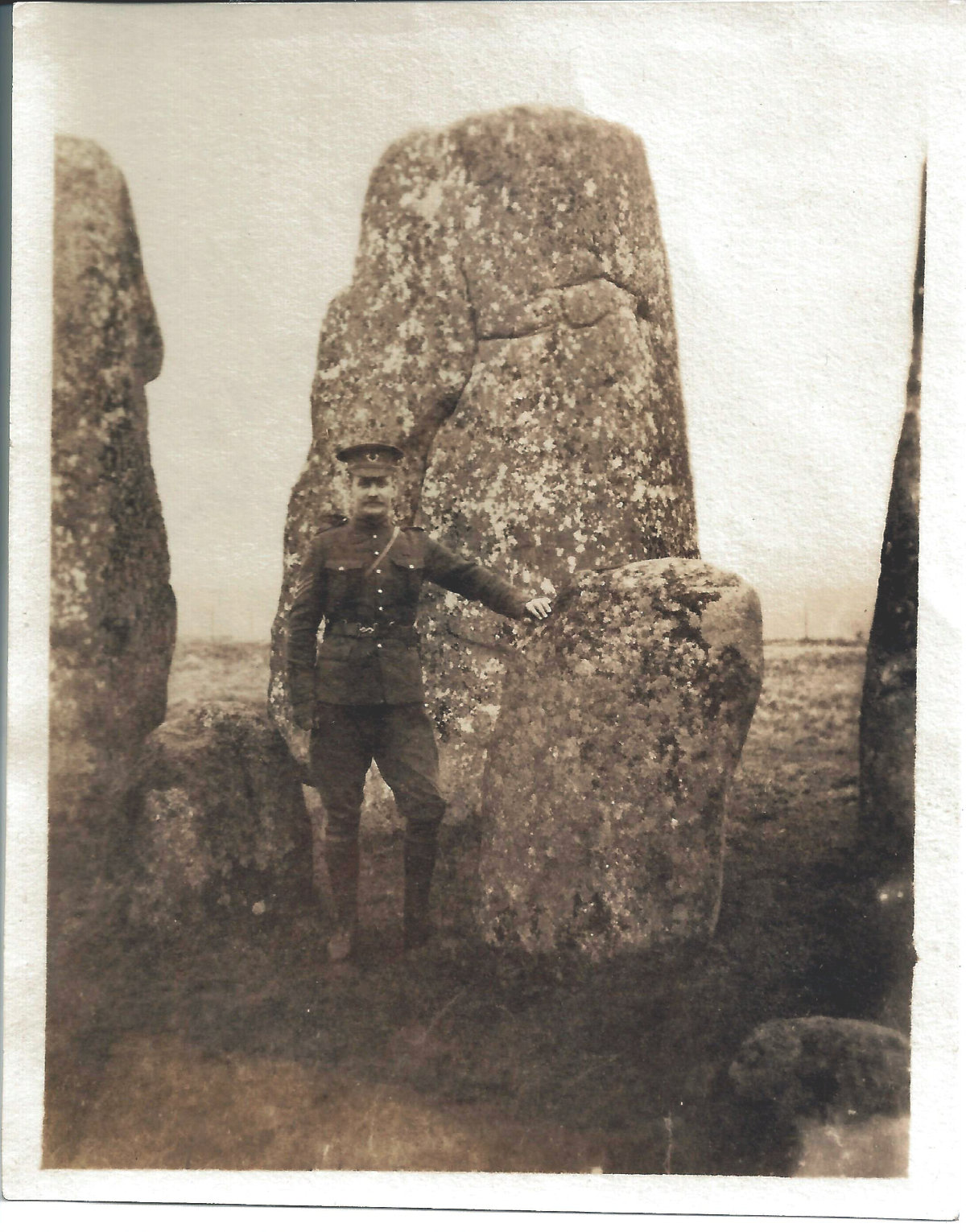
W.A. Alldritt at Stonehenge
February 4, 1915 – Inspection by the King
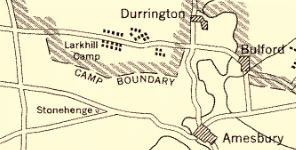
William’s diary entry for February 4, 1915 notes an inspection by King George V at Lark Hill.
William wrote more details of this event and the “excitment of the Canadian troops on the eve of their departure to the front” to his old friend and mentor, T.D. Patton, who was now General Secretary of the YMCA. The letter to Mr. Patton was subsequently published in the paper. As if in foreshadow, William concludes the letter by stating: “and don’t think I am dead until six months after they all say so.“
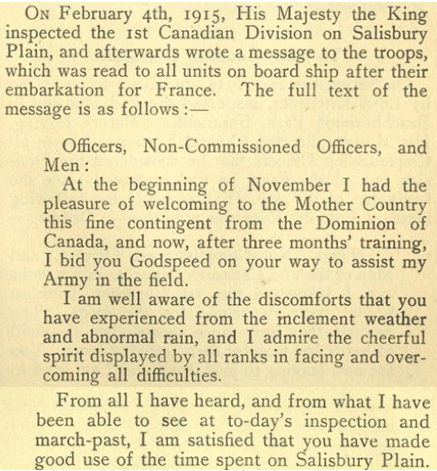
The King’s reaction to his inspection of the troops was published in Sir Max Aitken’s Canada in Flanders:11
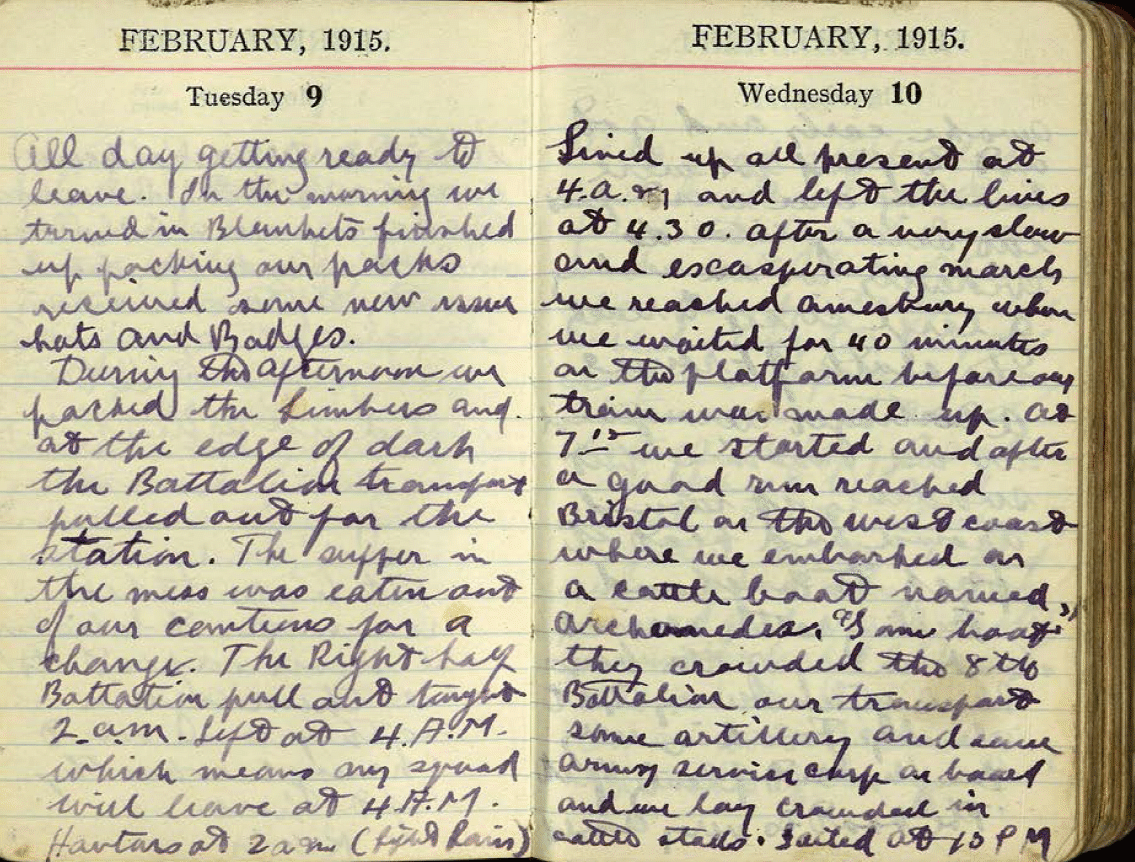
William’s diary entry for February 9 and 10 documents his preparations to sail for France aboard a cattle boat named Archimedes. “Some boat” William’s note implied sarcasm. He added: “they crowded the 8th Battalion, our transport, some artillery and some army service corps on board and we lay crowded in cattle stalls.“
Entrained and Started North
William noted that they continued to sail, accompanied by a Destroyer for part of the journey, finally landing at St. Nazair, France on February 12, 1915.
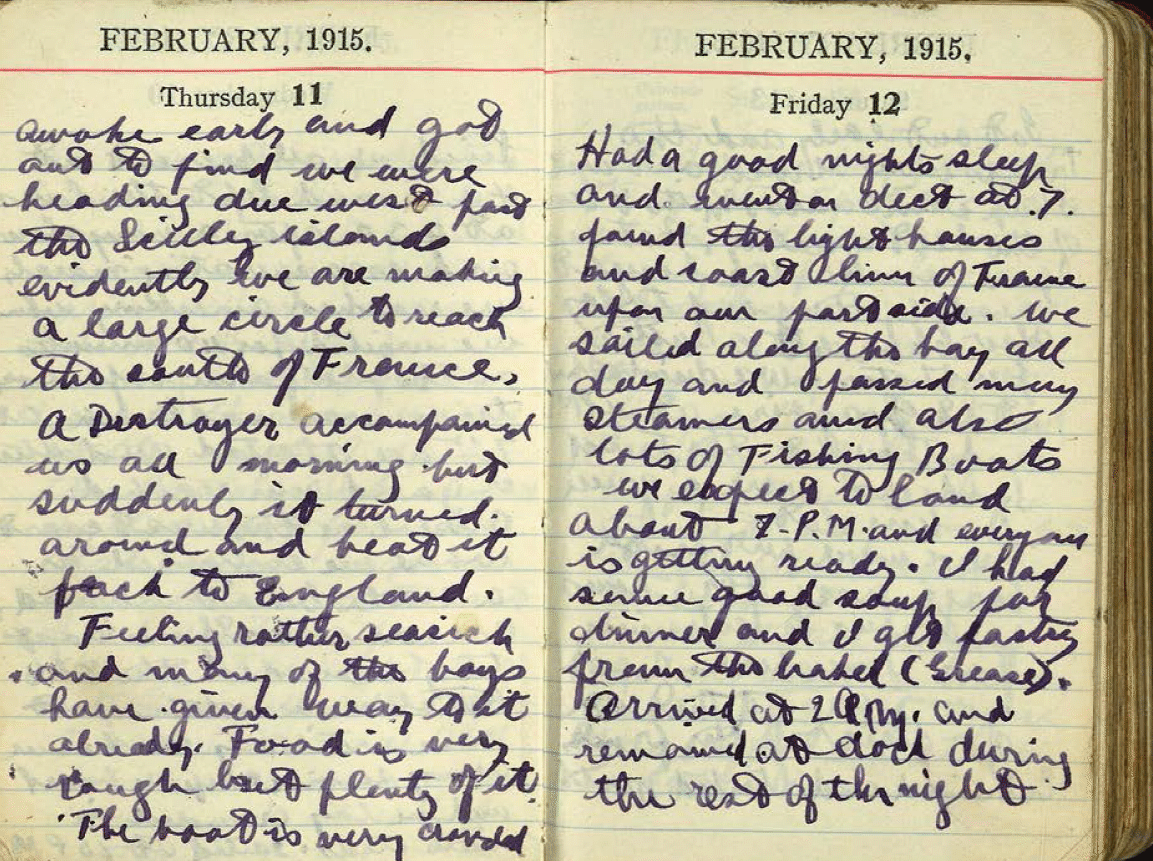
William ended his entry for February 13 by stating: “Report going around that we go direct to the front. Entrained and started North.”
William’s diary documented his journey through France while being mobilized toward Belgium.
For more information on this period, click the symbols to see the diary entries. Click on the images to enlarge each entry. Some diary points have entries for multiple days, click the arrows to read more.
2nd Ypres – the Battle of St. Julien
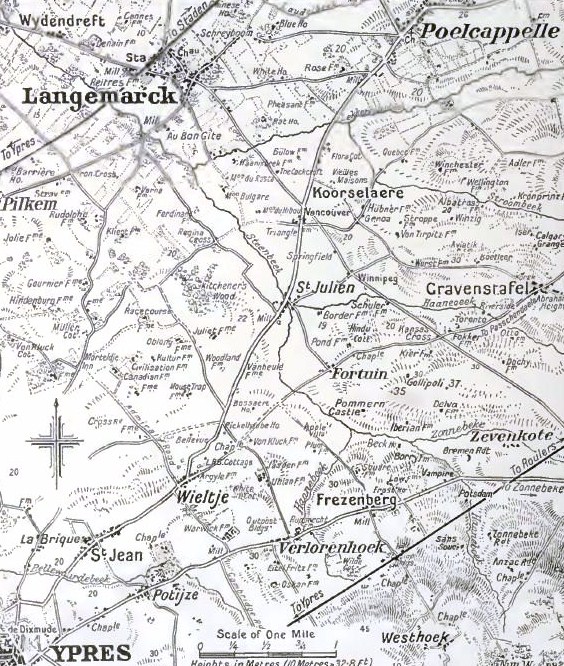
Although his unit saw limited action in February and March, William and the Canadians received their“baptism of fire” during the Second Battle of Ypres, where the men from the Canadian 8th Battalion are credited with holding their ground in defence of the town of St. Julien, beginning on April 22, 1915. This battle is best remembered as the first time that chlorine gas was used to asphyxiate soldiers on the Western Front.
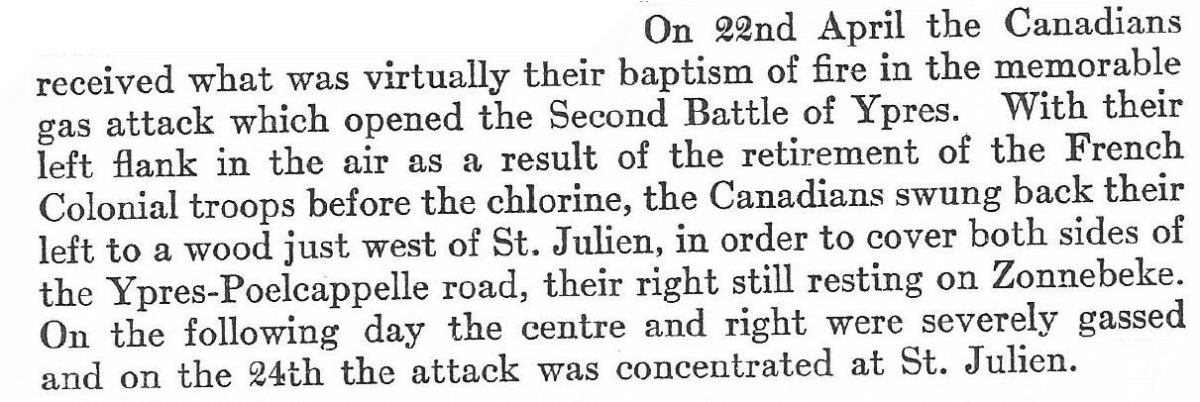
Gas!
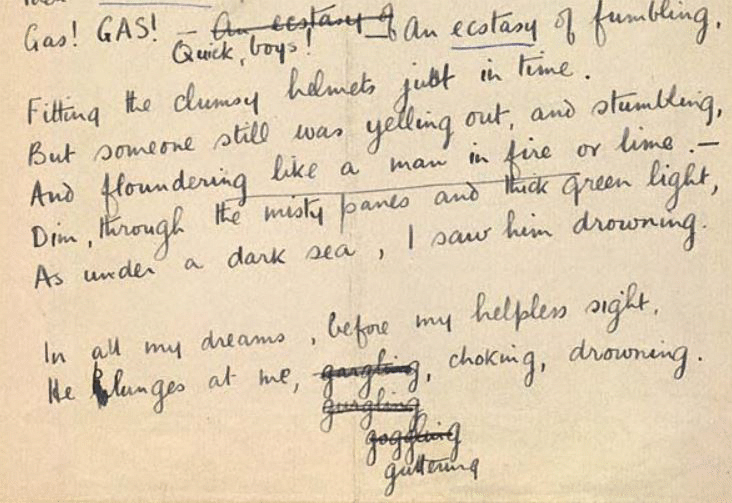
Listen to two personal recollections of the gas attack, recorded as part of the 1964 CBC Radio series, “Flanders’ Fields: Canadian Voices from WW1.”13
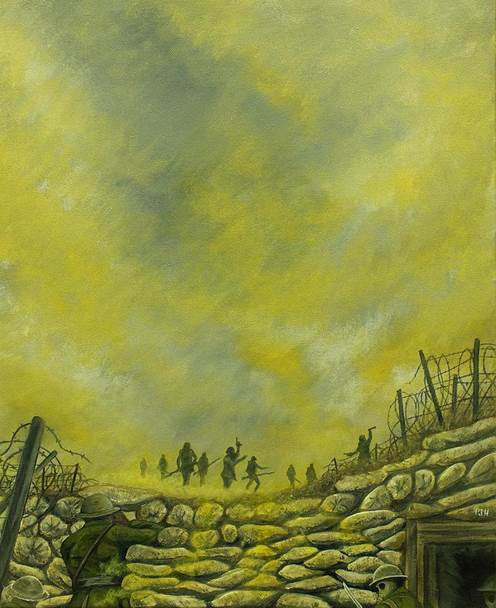
Fog of War
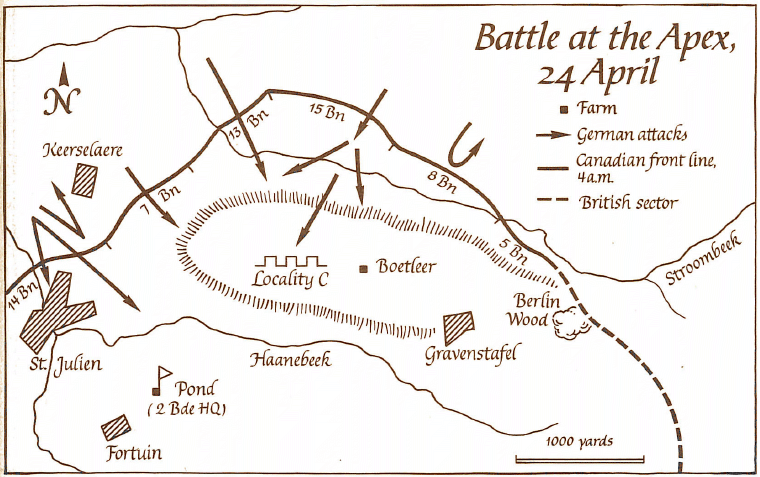
The “fog of war” was thick for the next few days in April, 1915, and we are left with many accounts of what took place in that battle:
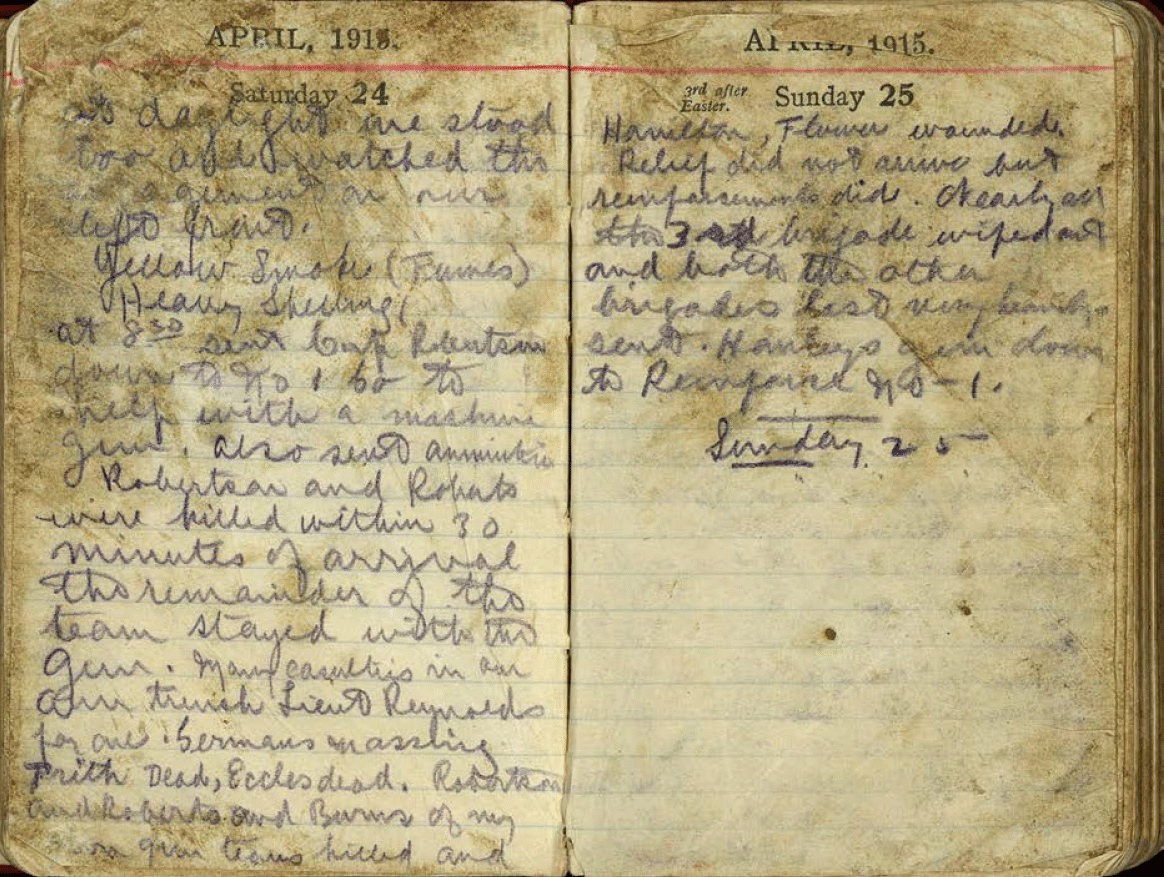
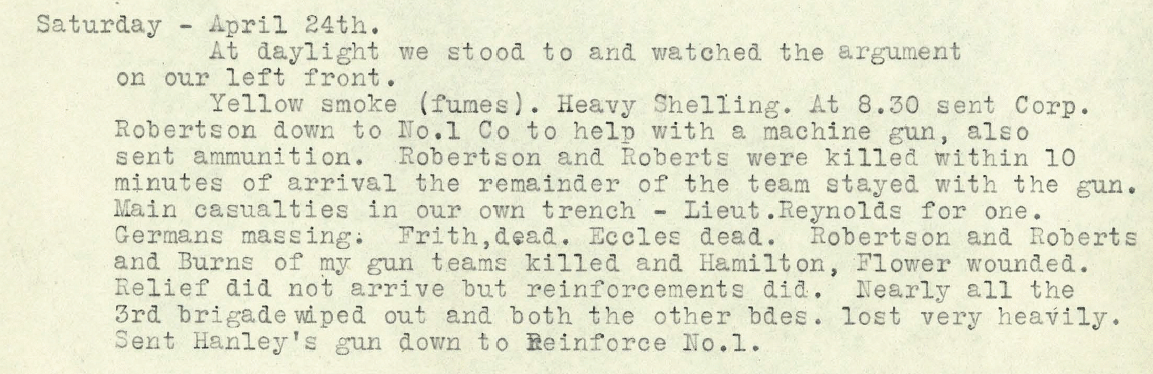
William’s diary describes the chaos of April 24, 1915 (text transcribed here). That he was not able to start his entry for April 25 is telling.
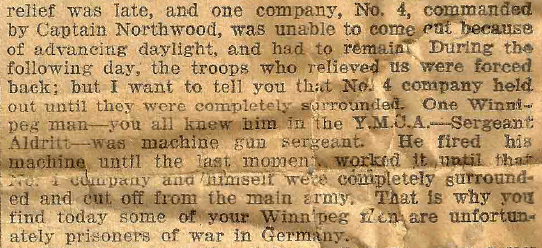
Winnipeg newspapers reported on first-hand accounts of the events. Lt. Col. A. Morley wrote as follows:
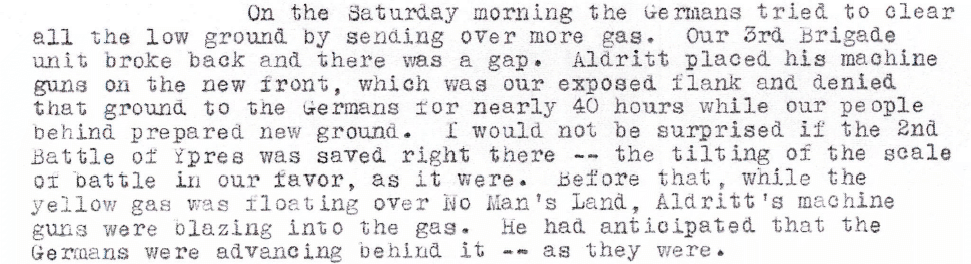
C.V. Combe described Alldritt’s heroics in his July 1938 letter to Maj. Northwood.
Desmond Morton wrote, in Silent Battle: “When neighbouring battalions had retired or been gassed to death, the Canadians turned their guns on the gap and held the breach for three days without relief.”14
Historian Tim Cook recounts that Sgt. Alldritt was “firing his Colt machine gun for 3 full days, stopping only when he ran out of ammunition or when the barrel overheated.”15
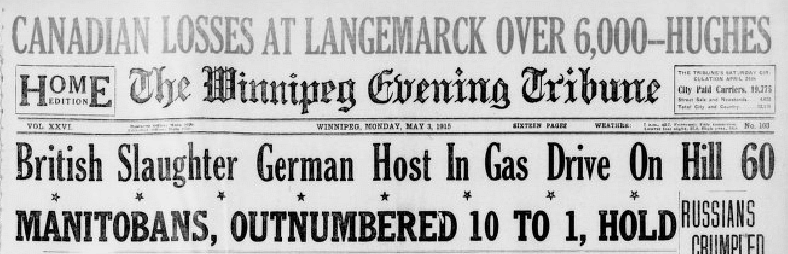
Winnipeg papers proudly reported on events:
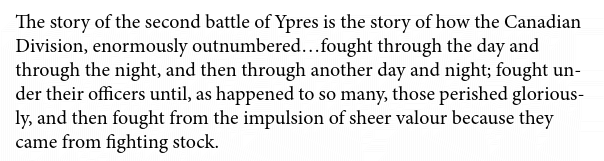
In his book, Baptism of Fire, Nathan M. Greenfield references Sir Max Aitken’s quote from The Times, May 1, 1915.16
The 8th Battalion’s pride in the perseverance of its men during the Second Battle of Ypres was captured in a 1933 publication written to commemorate the fiftieth anniversary of the Winnipeg Rifles17 (statements that were repeated by prominent Winnipeg journalist Vince Leah in a 1976 story in his Winnipeg Tribune column “Ypres anniversary slips by virtually unnoticed” which lamented the waning memory of the battalion’s accomplishments):
“Early on April 25, relief from the Durham Light Infantry began to move in but to the dismay of No. 4 company, their relief turned back. The battle continued in its intensity and by evening the only troops left in the front line were No. 4 company and the battalion’s machine gun section. Capt. George Northwood’s men fought valiantly until they were eventually overrun and many of them captured.
Of that battle, of which the 8th is prouder than any other of its battle honours, John Buchan, English war historian wrote: “Colonel Lipsett’s battalion, which held the pivotal point on Gravenstafel Ridge did not move an inch.”
After the war, David Lloyd George, Britain’s war-time premier, said: “The 8th, by steadiness under strain, was the focal point of saving the channel ports and removing the danger to England of invasion.”
The London Times’ war history also noted that the 8th won special distinction as the one regiment that held its trenches firmly, though heavily gassed.”
April 25, 1915
The Official History of the Canadian Army in the First World War was published in 1962, and the events were illustrated with maps.
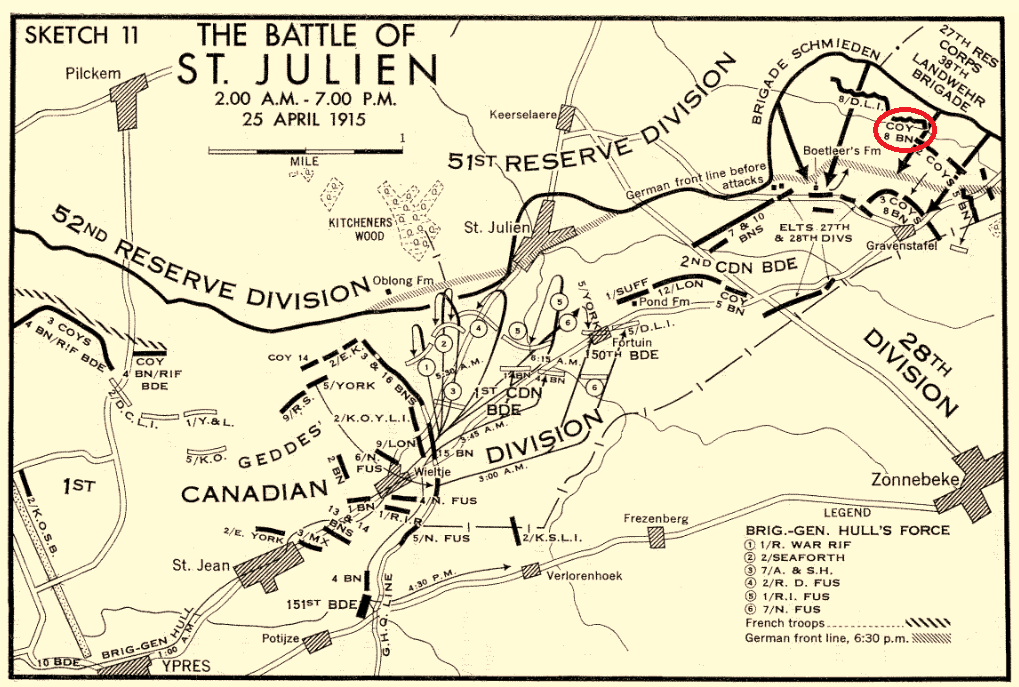
This corresponds to the location identified with a “+” from the official war diaries sketch, showing where No. 4 Company was captured in the early evening of 25 April.
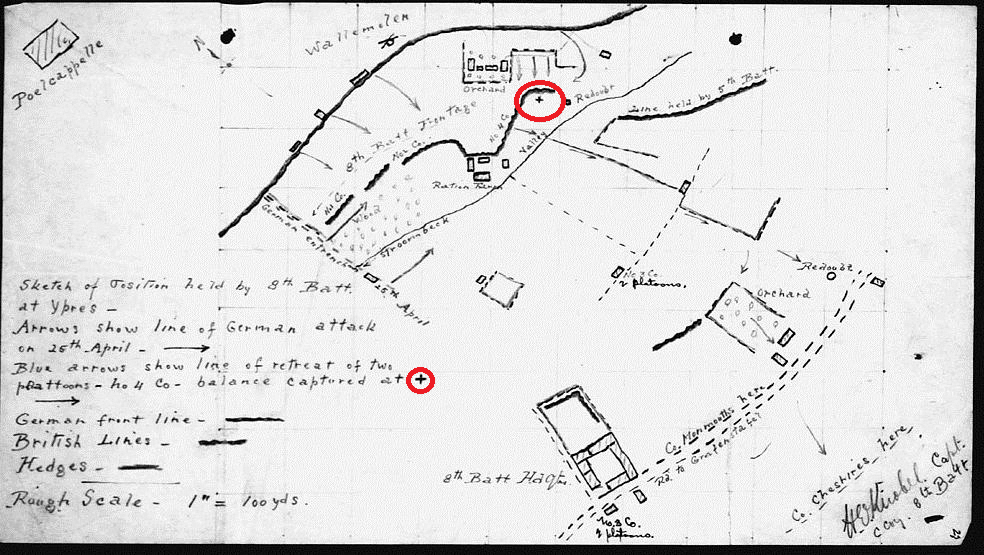
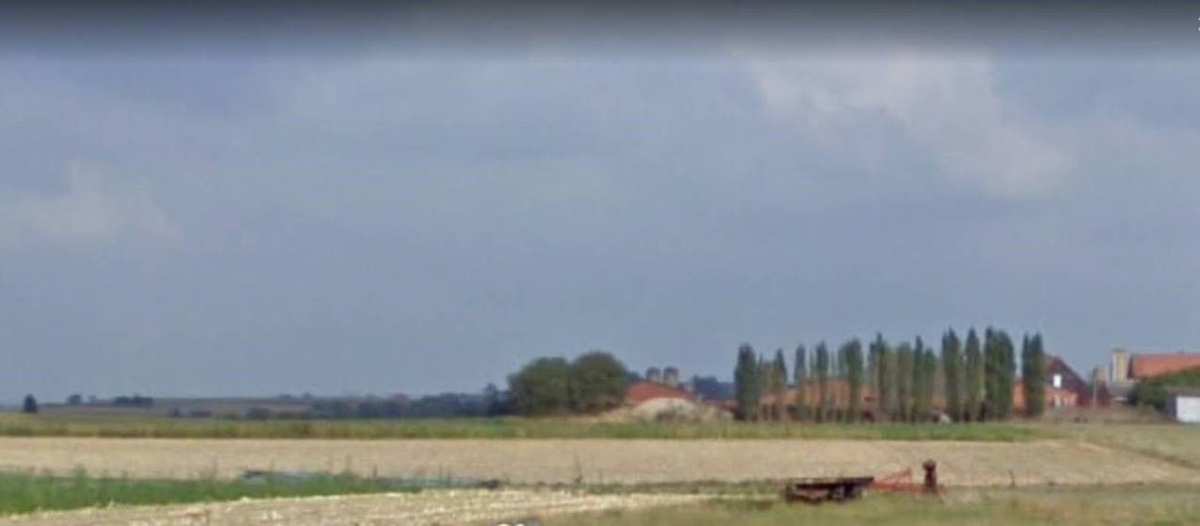
This location in present-day Belgium is very likely in the field of a farm house located at 8 Wallemolenstraat, Zonnebeke*, which is on the high point of a subtle spur on Gravenstafel Ridge, that juts north and slightly east.
This site fits C.V. Combe’s description of William as having taken “the position of danger with the machine guns at the foot of the ridge” as he stated in his July 1938 letter to Maj. Northwood.
The modern image below is from the farm field in Zonnebeke. Looking slightly to the north (left) a subtle ridge is visible. This is likely the panorama that William saw filling with gas while he manned his machine gun.
Victoria Cross Recommended
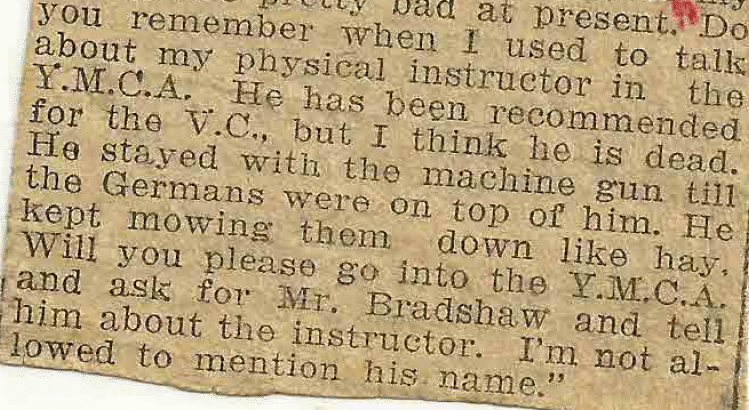
By many accounts, William was recommended to receive the Victoria Cross for his actions during the battle. Pte. A. Gumm’s first-hand statement was published in the Winnipeg paper:
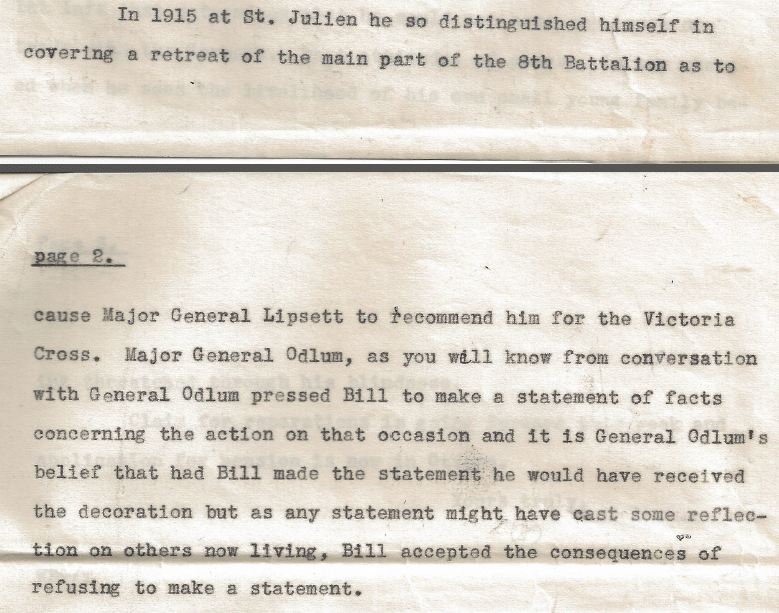
The question as to what statement Maj.-Gen. Odlum wanted Bill to make remains to be answered. It seems clear, however, that the prize of a Victoria Cross, the highest military decoration, awarded “for acting with extreme devotion to duty,” hung in the balance.
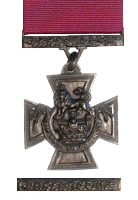
Had William been killed in the battle, as was Sgt-Maj. Frederick W. Hall, V.C., who was the first member of the 8th Battalion to have received the Victoria Cross, there would not have been any expectation that he would answer any questions to have been awarded the medal.
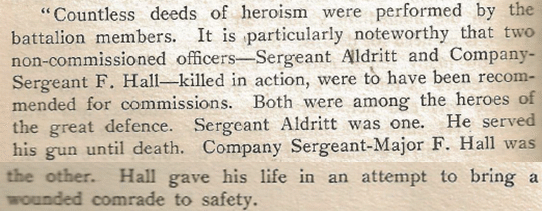
In The Battle Glory of Canada, A.B. Tucker references a letter written by an unidentified Winnipeg Private which describes both Sergeants Alldritt and Hall as two heros of the 2nd Battle of Ypres.19
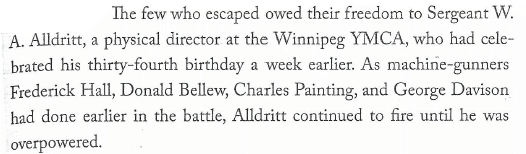
Nathan Greenfield boosts the credibility in Baptism of Fire, where the actions of both Sergeants Alldritt and Hall are mentioned together.20
Fifty years later, in the CBC “Flanders’ Fields” recordings, Gen. Odlum and others voiced a more pragmatic recollection of events: that there had really been nothing to boast about, they just did all they knew, which was to stay calm and fight until the end…21
Prisoner of War
Newspapers at the time reported that William was killed in action.
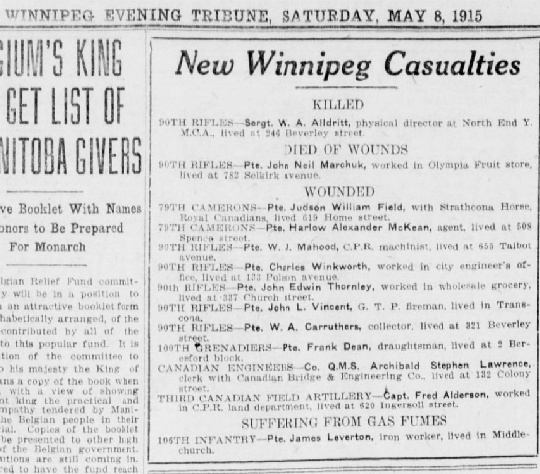
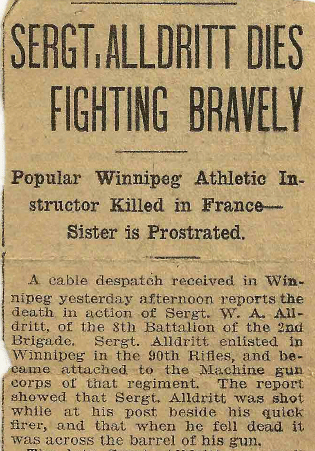
Back in Winnipeg, memorial services were held in honour of those who were killed during the Second Battle of Ypres. On Sunday, May 9, 1915 – the day after the papers reported William as dead – the traditional Decoration Day parade in Winnipeg was repurposed to honour those killed in the current war. Following an outdoor church service on the grounds of the University of Manitoba, the attendees marched to St. John’s cemetery, stopping to lay a huge wreath at the base of the 90th Regiment memorial column. It was inscribed: “In affectionate memory of our boys who have fallen at the front in the great European war, and in sympathy for their relatives.”22
William was not killed; he was taken prisoner when his guns were finally surrounded and found himself as one of approximately 1,400 Canadian prisoners of war taken at Ypres (nearly half of all Canadian prisoners taken in Europe were captured during that battle).
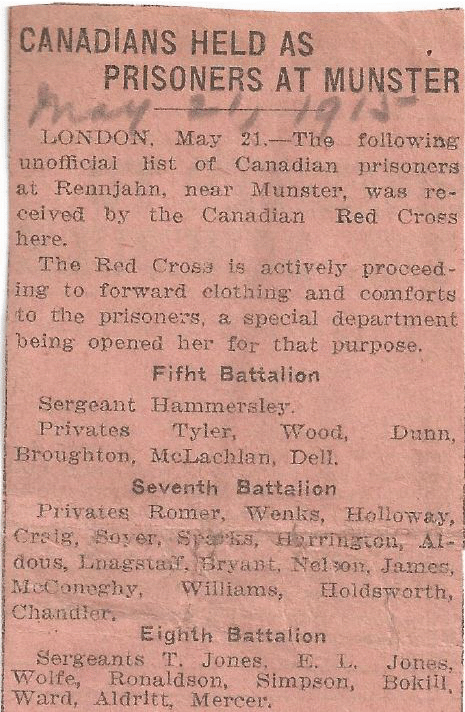
This news was not received by all, however. Even as recently as 1988, some historians were still planting a poppy for William, right there on Gravenstafel Ridge.23
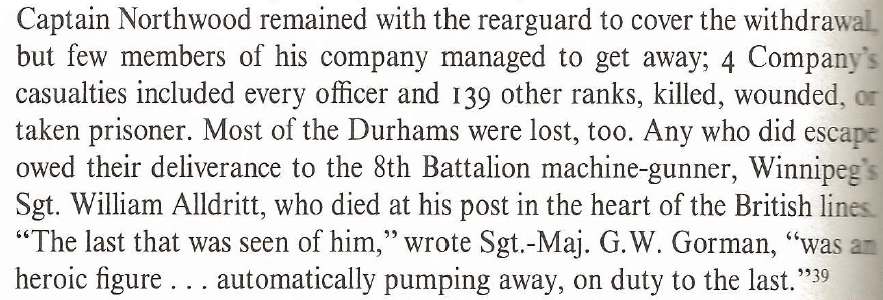
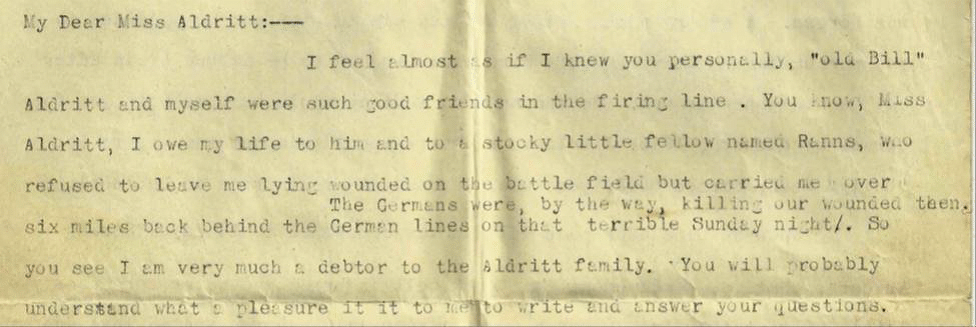
As he was captured, William convinced his captors to allow him to carry a wounded man who William knew from the Winnipeg YMCA, from the battlefield. Along with another soldier, “a stocky little fellow named Ranns” who was likely Pte. B.J. Rands, they shared the efforts to carry Pte. C.V. Combe several miles into the German lines where they were to be held captive.
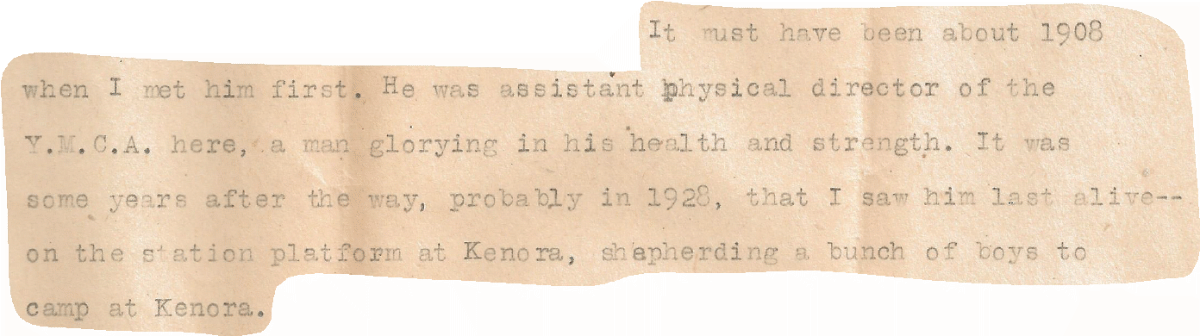
In a letter he wrote to William’s sister Ethel, dated November 8, 1916, Pte. C.V. Combe credits the men with saving his life:
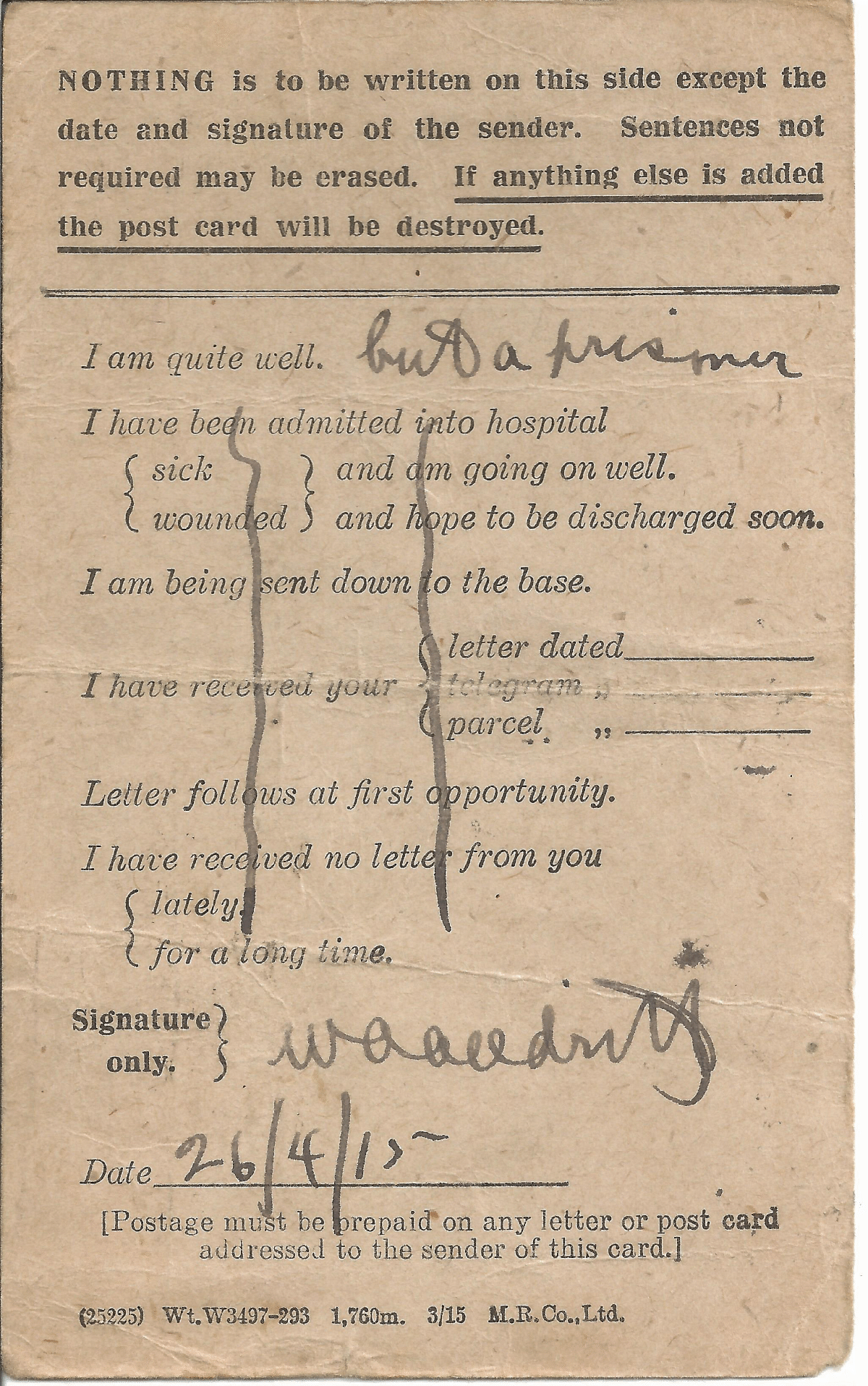
William’s diary was left behind in the mud on that day; it is unlikely that he ever saw it again.
Alive and Kicking
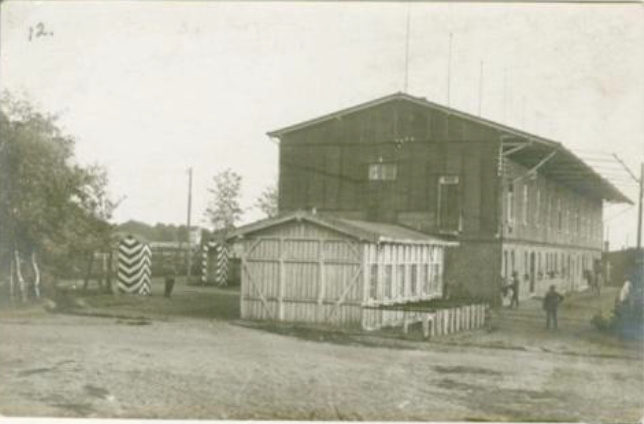
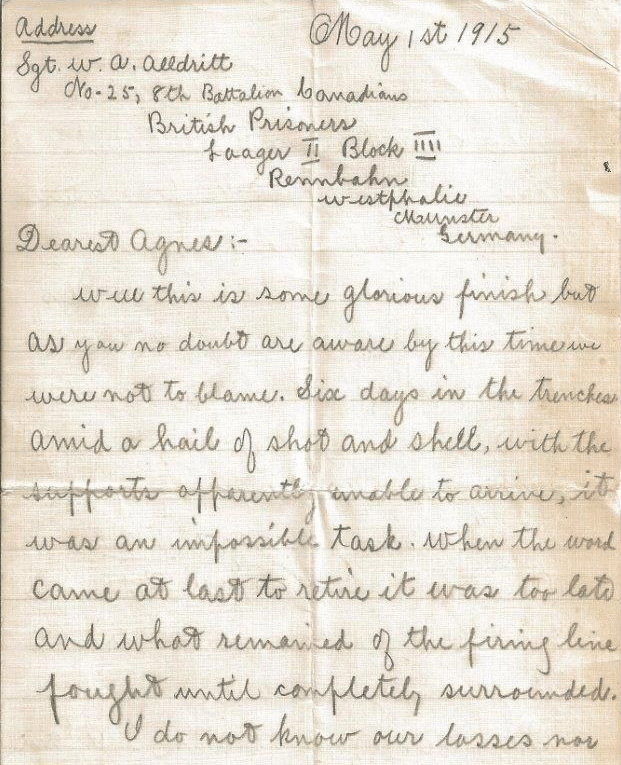
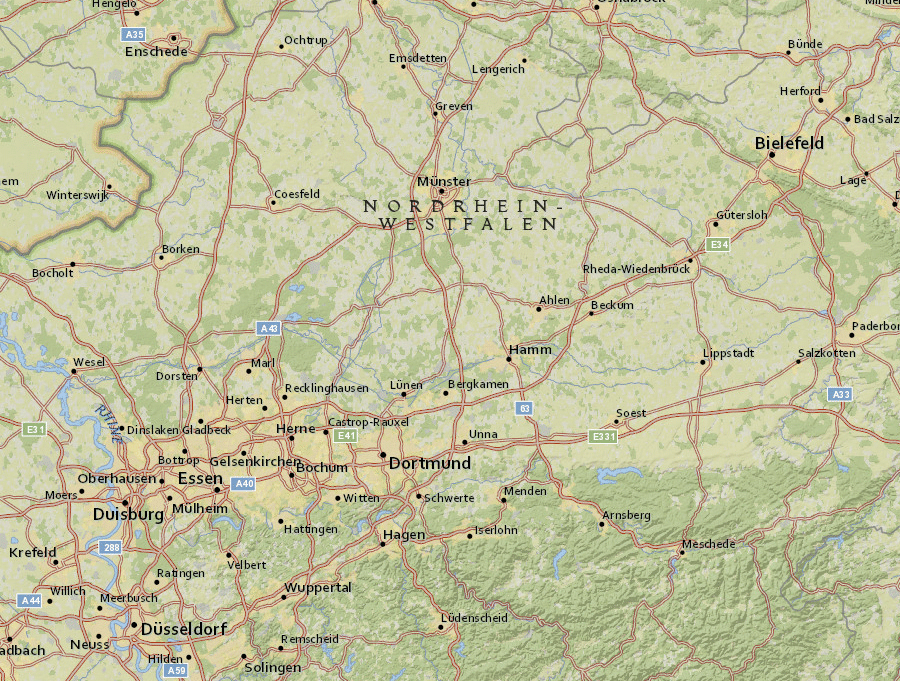
A week after he was captured, William was able to write that his location was Rennbahn Kriegsgefangenenlager (Prisoner of War Camp). Rennbahn camp was built on a former race track, near Munster in Westphalia.
In a letter to Ethel, simply dated May, 1915, William stated that he had a restriction on the number of letters he could write.24 All letters and cards had to pass through German censorship before they were sent home, so William had to be careful – or calculating – in what he wrote…
During the 35 months that William was a prisoner in Germany, he wrote prolifically and took advantage of his allotment to its fullest. From the letters he sent, we know that he was held captive in Rennbahn camp from at least May 1, 1915 until he moved to a new camp sometime after July 15, 1915.
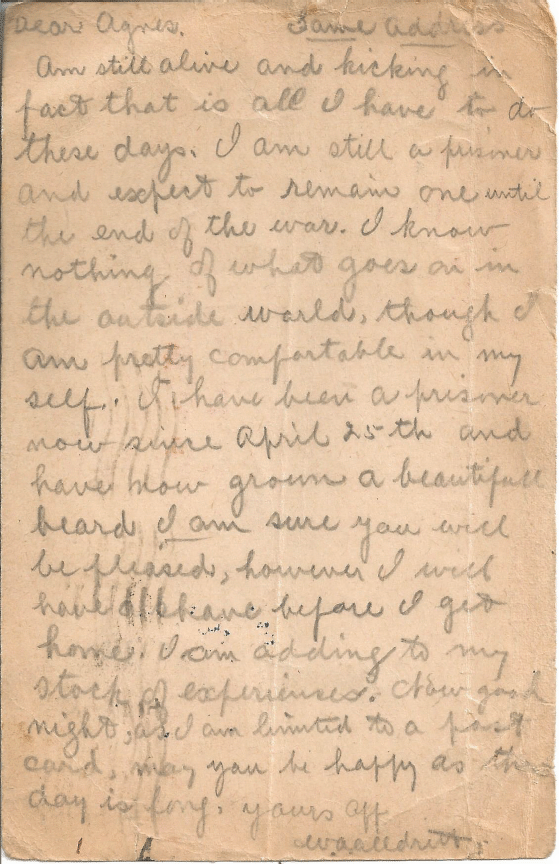
William sent a card to his future wife, Agnes Kennedy, from Rennbahn camp. He wrote: “Am still alive and kicking in fact that is all I have to do these days…”
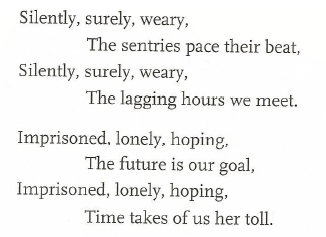
The idleness of life as a PoW must have been a hard adjustment for someone as vigourous and determined as William. As well, the stigma of surrendering was a psychological burden felt by many PoWs. As Desmond Morton wrote in the introduction to Silent Battle: “Prisoners were a flaw in the heroic myth of men fighting to the death rather than surrendering.” 26
A myth further evidenced by the British Red Cross, who erroneously stated “that it was to Canada’s ‘eternal honour’ that every single Canadian soldier captured at Ypres in April 1915 was either wounded or gassed.” 27
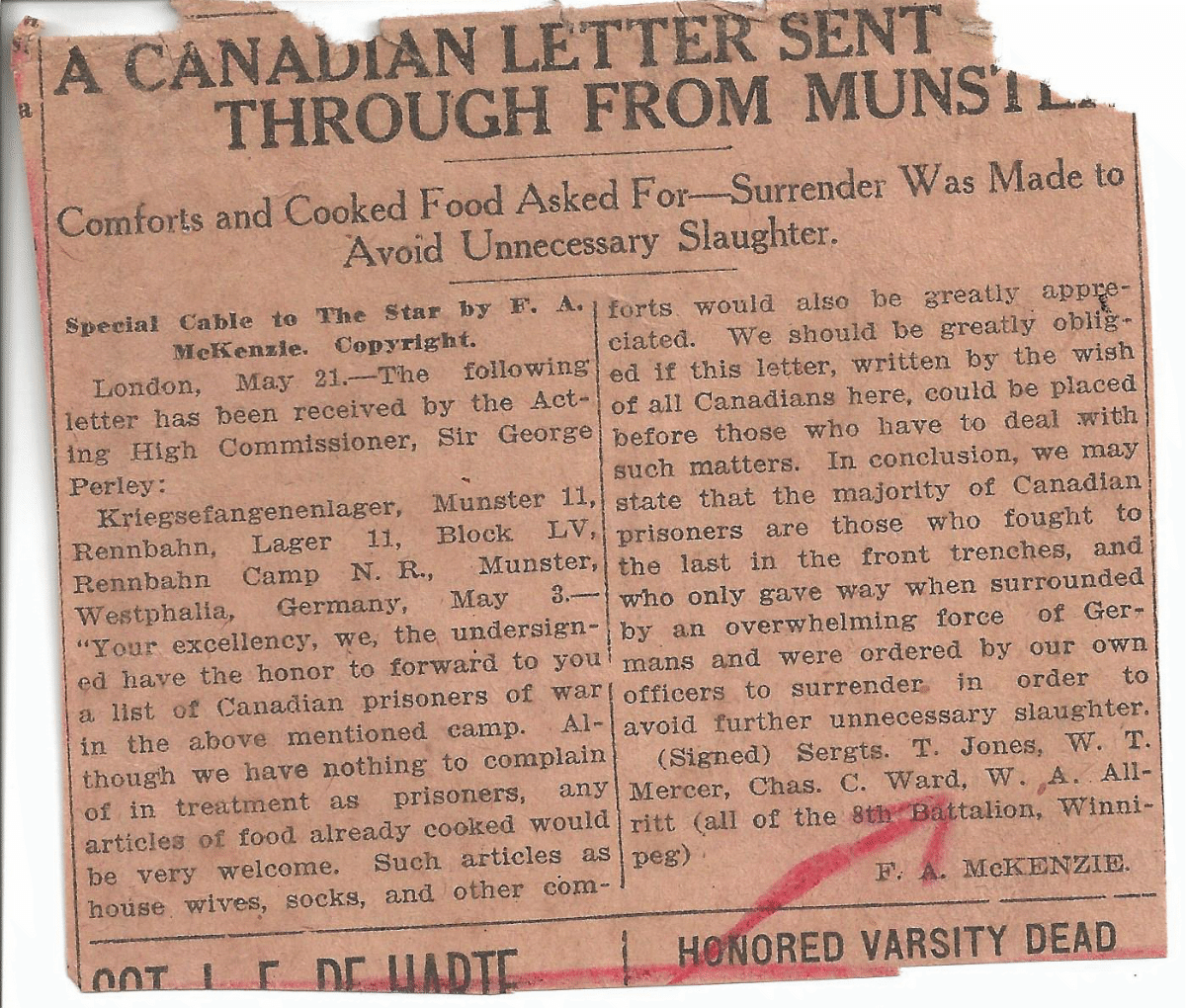
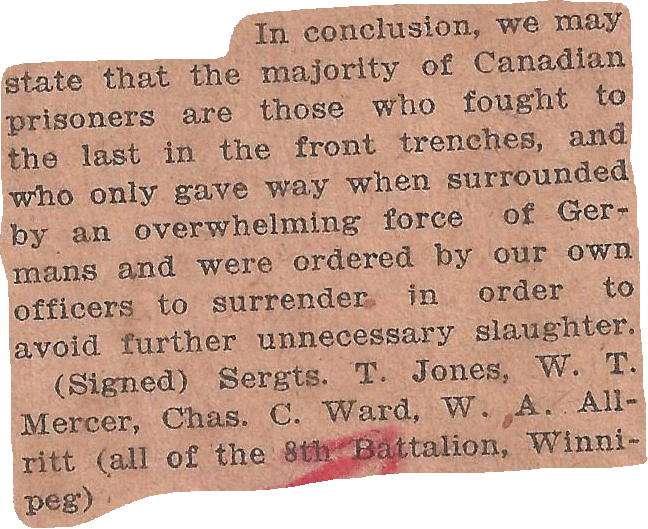
A published letter co-signed by William, justifying the reasons behind the men’s surrender, is a telling example of this:
Having a loved one detained as a prisoner of war also placed a psychological strain on families back home.
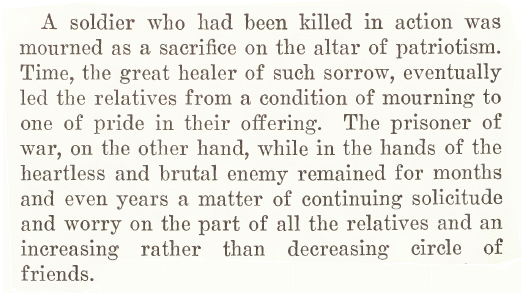
In addition to saving the letters William wrote home, Agnes kept a detailed scrapbook of newspaper articles about the war, and in particular, stories pertaining to prisoners of war.
Prisons, Salt Mines, Iron digging
Click the map symbols (green = camp, black = kommando) for details as to when he was in each location – the dates are approximate based on the chronology of his letters. Some map points contain images of the camps. Click these images to enlarge.
William found himself in several prison camps and “working kommandos” during his time in Germany.
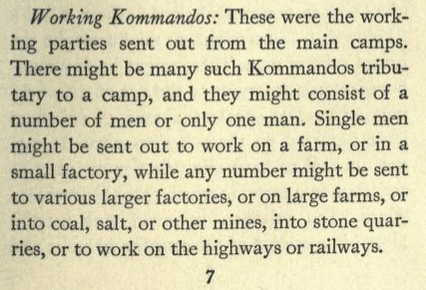
The kommandos were work camps, and William’s experience with them included work in coal mines, salt mines, iron works and on farms. In his own words, in a letter written to Agnes on March 24, 1918, while interned in Holland where his correspondence was no longer subject to censorship: “Prison, Salt Mines, Iron digging etc. have all claimed my attention…”
William wrote many letters while interned in German camps and kommandos. From carefully worded statements he made in his letters, we can infer that he escaped at least four times: in December 1915, June 1916, September 1916, and October 1917. He was recaptured after each escape, however, and forced to endure increasingly harsher punishments each time.
William wrote nearly 400 letters as a prisoner of war, many using code words and hidden messages to request contraband supplies that could help him to escape. Content of these letters, including details of his escape attempts, is the subject of a sequel story. Future projects will also document his post-war work with the YMCA and in advancing amateur athletics in Canada, some of which is featured in an article on ActiveHistory.ca. Some of the content of his letters as a prisoner is also documented in this article on ActiveHistory.ca. This article describes William’s experience in Holland up to and following the Armistice.
Bibliography
Unpublished Sources:
Letters collection of W.A. Alldritt, including letters by C.V. Combe and W.E. Davison. (Update, April 2019, letters reference: Alldritt Letters Collection, 20160547, George Metcalf Archival Collection, Canadian War Museum.)
Other Sources:
Aitken, Sir Max. Canada in Flanders: The Official Story of the Canadian Expeditionary Force, Volume 1. London, Toronto, New York: Hodder and Stoughton, 1916.
Bishop, Charles W. The Canadian Y.M.C.A. in the Great War. Toronto: National Council of YMCAs of Canada, 1924.
Blanchard, Jim. Winnipeg’s Great War: A City Comes of Age. Winnipeg: University of Manitoba Press, 2010.
CBC Radio. Interviews with Victor W. Odlum, et al. Flanders’ Fields: Canadian Voices from WW1. CBC, 1964.
Cook, Tim. At the Sharp End: Canadians Fighting the Great War 1914 – 1916. Toronto: Viking Canada, 2007.
Daly, Brian I. Canada’s Other Game: Basketball from Naismith to Nash. Toronto: Dundurn Press, 2013.
Dancocks, Daniel G. Welcome to Flanders Fields The First Canadian Battle of the Great War: Ypres, 1915. Toronto: McClelland and Stewart, 1988.
Dennett, Carl P. Prisoners of the Great War: Authoritative Statement of Conditions in the Prison Camps of Germany. Boston and New York: Houghton Mifflin Co., 1919.
Duthie, William S. et al. (Eds.), Letters from the Front: Being a Record of the Part Played by Officers of the Bank in the Great War, 1914-1919, 2 vols. Toronto: The Canadian Bank of Commerce, 1920.
Greenfield, Nathan M. Baptism of Fire: The Second Battle of Ypres and the Forging of Canada, April, 1915. Toronto: Harper Collins, 2007.
Leah, Vince. “Pages from the Past: The Gallant Toilers.” Winnipeg Tribune, 1975.
Library and Archives Canada, William Alexander Alldritt fonds. R1875-0-7-E. MG30-E1.
MIKAN no. 98218, (Diary of William A. Alldritt, reproduction copy number Q6-26058).
McCarthy, Daniel J. The Prisoner of War in Germany: The Care and Treatment of the Prisoner of War with a History of the Development of the Practice of Neutral Inspectorate. New York: Moffat, Yard and Co., 1918.
Morton, Desmond. Silent Battle: Canadian Prisoners of War in Germany 1914 – 1919. Toronto: Key Porter, 1992.
Naismith, James. Basketball: Its Origin and Development. Lincoln NE: University of Nebraska Press, 1941.
Nicholson, Gerald W. L. Canadian Expeditionary Force 1914-1919: Official History of the Canadian Army in the First World War. Ottawa: Queen’s Printer, 1962.
Patton, T. Duncan. “Basketball – How and When Introduced” Golden Jubilee of Basketball Souvenir Magazine (1941): 4-5. (Courtesy Springfield College, Archives Digital Collection)
Ross, Murray G. The Y.M.C.A. in Canada: The Chronicle of a Century. Toronto: Ryerson Press, 1951.
Tucker, A.B. The Battle Glory of Canada, Being the Story of the Canadians at the Front, Including the Battle of Ypres. London and New York: Cassell and Co., 1915.
Vance, Jonathan F. Objects of Concern: Canadian Prisoners of War Through the Twentieth Century. Vancouver: UBC Press, 1994.
The Winnipeg Rifles, 8th Battalion, C.E.F., allied with the Rifle Brigade (Prince Consort’s Own): Fiftieth Anniversary, 1883-1933. Winnipeg: Winnipeg Rifles, General Anniversary Committee, 1933.